Living in Duncanville, TX: The Honest Pros and Cons of the City of Champions
Living in Duncanville, TX: The Honest Pros and Cons of the City of Champions
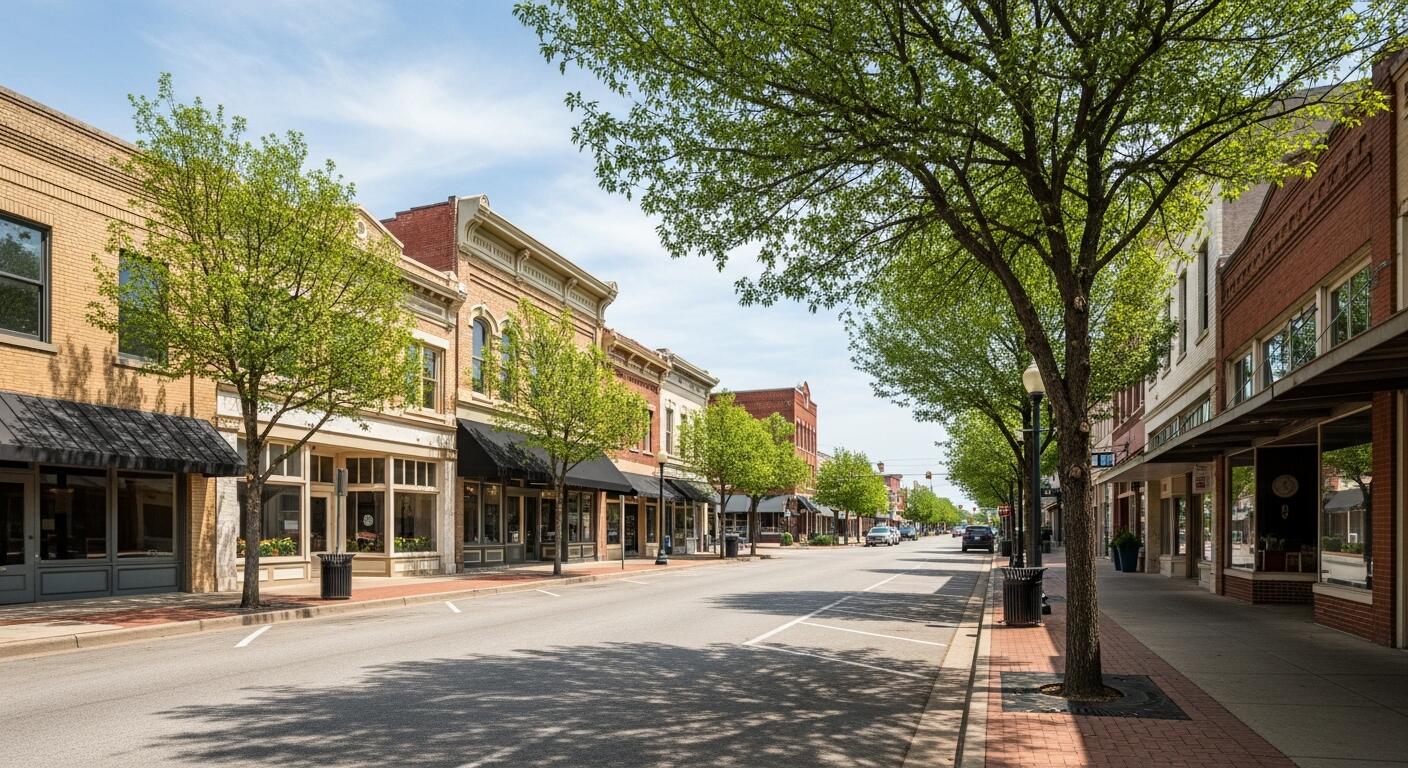
Duncanville calls itself the City of Champions, and it isn't marketing — Duncanville High's basketball programs are among the most decorated in Texas history, the football program a perennial power, and Friday nights and playoff runs are civic events. Beyond the trophies, this 40,000-resident Best Southwest suburb offers what the whole southern sector offers at its best: established brick neighborhoods under real trees, honest affordability, and a 15-mile run to downtown Dallas.
Here's the straight breakdown of the champion and its challenges.
Quick Snapshot
- County: Dallas
- Population: Roughly 40,000
- Typical price range: Approximately $250,000–$375,000 across most of the established market, with larger updated homes and the Swan Ridge/hillside pockets above
- School district: Duncanville ISD, with area charter options and neighboring-district proximity
- Location: US-67 and I-20, roughly 15 miles southwest of downtown Dallas — 20–25 minutes off-peak
- Vibe: Established, athletic, unpretentious, neighborly
The Pros
1. Genuine affordability inside Dallas County
Duncanville's dominant 1960s–1980s housing stock — solid brick ranches and two-stories on real lots under mature trees — trades in the $200,000s and low $300,000s. For first-time buyers, downsizers, and value hunters who want Dallas County proximity without Dallas County-premium pricing, Duncanville remains one of the honest entry points left.
2. The champion identity is real community glue
The Panthers' basketball dynasty (boys' and girls' programs both stacked with state titles) and football tradition give Duncanville something money can't buy elsewhere: shared civic pride and packed gyms that bind generations of residents. Youth sports feed the pipeline; the pipeline feeds the town's identity.
3. Location at the Best Southwest crossroads
US-67 and I-20 meet here: downtown Dallas in 20–25 minutes off-peak, the I-20 southern employment belt at the doorstep, Cedar Hill's retail hub minutes away, and the escarpment's outdoor cluster (Cedar Ridge Preserve borders the city) close enough for after-work hikes — all toll-free.
4. Mature trees and established fabric
The southern sector's quiet luxury: neighborhoods that finished growing in decades past, with the canopy, settled streets, and lot sizes newer suburbs can't replicate. Well-kept blocks in the city's core hold their look and their neighbors for decades.
5. Small-city accessibility
A 40,000-person city means reachable government, community events that actually gather the community (the annual celebrations at Armstrong Park are institutions), and local fixtures — Redbird Skateland's retro rink, the recreation center's programs — that give daily life texture.
6. Best Southwest momentum
The same southern-sector rise lifting DeSoto and Cedar Hill — logistics employment, new retail, buyers finally looking south — runs through Duncanville, whose established fabric and location are positioned to benefit as the sector's story builds.
The Cons
1. School ratings require campus-level honesty
Duncanville ISD's athletic excellence is undisputed; its campus-level academic ratings currently sit mid-scale rather than top-tier, and — as across the Best Southwest — many families run deliberate strategies mixing district campuses, charters, and neighboring options. Shop the specific campus with live data and tour it; the district's program-level strengths (including career-tech and the athletics-linked opportunities) deserve the firsthand look.
2. Aging stock, aging systems
A city built largely before 1985 means roofs on multiple replacement cycles, original-era plumbing and electrical in unrenovated homes, and foundation vigilance on Dallas clay. The affordability math holds only with inspection rigor and honest system budgets attached — renovated homes price the difference for you.
3. Retail and dining depth is thin
Duncanville's own destination-dining bench is short; Main Street's revival is a work in progress, and the good dinner frequently means Cedar Hill, Dallas, or Grand Prairie. New entries are appearing — but today's resident drives for date night.
4. Value appreciation has trailed the north
The southern-sector discount is structural and cuts both ways: entry costs less, and historical appreciation has run slower than the northern corridor. Underwrite on lifestyle-per-dollar today; treat the sector's rising trajectory as upside.
5. Block-by-block variation
As throughout the older southern suburbs, upkeep and conditions vary meaningfully street to street. The well-kept core blocks are genuinely lovely; some pockets show wear. Evaluate the specific block and its direction — twice, once at night.
6. Corridor congestion at peak
US-67 toward the Mixmaster and I-20's interchange loads stack up at rush hour. Off-peak Duncanville moves beautifully; peak-hour Dallas runs need the standard test drive.
Cost of Ownership: The Established-Suburb Math
Model a $310,000 Duncanville home. The tax stack — city, Dallas County, Duncanville ISD, college and hospital districts — lands in the mid-2% range before exemptions, with no MUD/PID layers anywhere in the established fabric: a legible bill that exemption management meaningfully trims. Homestead files with the Dallas Central Appraisal District immediately; the annual protest is a worthwhile Dallas County habit; over-65 ceilings make the city's single-story ranch stock a genuine aging-in-place play.
Insurance keys to roof age above all — on 40-year-old housing stock, the replacement date is the quote — and mature-tree canopy belongs in both the shade savings and the storm-risk calculus. System reserves are the honest counterweight to the entry price: HVAC, sewer lines, and panels on pre-1985 homes are when-not-if items. The offsets: toll-free commuting in every direction, no HOA dues across most neighborhoods, and a cost basis that lets the same income live larger than it would north of the river.
Frequently Asked Questions About Living in Duncanville
Is Duncanville really the "City of Champions"? The trophy case says yes — Duncanville High's basketball programs rank among the most decorated in Texas history, and the football program is a perennial state power. Game nights are the city's living room.
How's the commute to downtown Dallas? About 20–25 minutes off-peak via US-67 — one of the closest affordable suburbs to the core — stretching at rush hour like every corridor. The I-20 employment belt is closer still, and none of it requires a toll.
What are the schools like beyond athletics? Campus-level academic ratings currently run mid-scale, with program-level bright spots — which is why we point families to live campus data, tours, and the full option set (district, charter, neighboring) rather than a one-line answer. Build the school plan with the house plan.
What's the housing stock like? Predominantly 1960s–1980s brick on real lots — solid bones, mature trees, and systems whose ages belong in every offer. Renovated homes command clear premiums; original-condition homes are priced projects.
Is Duncanville safe? Like the rest of the established southern sector: block-dependent, with well-kept core neighborhoods living quietly and specific corridors needing the standard evaluation. Visit the block, day and night, and check current local data.
What's there to do in Duncanville itself? More than the size suggests: Armstrong Park's events calendar, the recreation center and fieldhouse programs, Redbird Skateland's retro roller rink (a genuine metro throwback destination), and the escarpment's trail cluster — Cedar Ridge Preserve's canyons — at the city's edge. Big-ticket entertainment means Dallas or Grand Prairie's EpicCentral, both inside 20 minutes.
How does Duncanville compare to DeSoto and Cedar Hill? The Best Southwest triangle in one line each: Duncanville is the closest-in and most affordable with the smallest-city feel; DeSoto trades a few minutes for bigger homes on bigger lots; Cedar Hill adds the hills, the state park, and the strongest retail hub. Many buyers tour all three in a weekend — the school-strategy and block-level homework is identical across them, so the choice usually comes down to commute direction and housing style.
Is Duncanville a good investment? As a value-and-location hold in a rising sector, the case is solid: Dallas County proximity, structural affordability, and Best Southwest momentum. Appreciation velocity has historically trailed the north — buy the lifestyle math first.
Where to Eat: 5 Favorites In and Around Duncanville
- Thibodeaux's Cajun Cookin' — The long-running local Cajun spot: catfish and shrimp po' boys, gumbo, and terrific onion rings.
- Alfonso's Breakfast Burritos — Hearty all-day burritos on fluffy tortillas; the red pork asado has a devoted following.
- Black & Bitter Coffee and Books — The community coffeehouse-bookstore hybrid that's become a local gathering fixture.
- Red Hot & Blue — Memphis-style pulled pork and dry ribs, Duncanville's Southern-barbecue standby.
- Vila Brazil (Cedar Hill) — The area's celebration answer: full rodizio Brazilian steakhouse ten minutes away.
Golf Near Duncanville
Thorntree Country Club, the established private championship course next door in DeSoto, is the neighborhood club answer, while Grand Prairie's escarpment standout Tangle Ridge and Dallas' historic municipals (Stevens Park's beloved Oak Cliff layout, Tillinghast's Cedar Crest) put excellent public golf within 20 minutes.
School Ratings Worth Knowing
Per our standing rule — verified 7+ GreatSchools numbers or none — we can't responsibly print campus ratings for Duncanville ISD as of this writing: current campus scores sit below that threshold across the district. What we can say: the athletics-linked opportunity pipeline is real, program-level strengths exist, and the Best Southwest's option set (charters, transfers, neighboring districts) is broad. Pull live campus ratings at GreatSchools' Duncanville page, tour the zoned schools, and make the school plan part of the purchase plan.
Neighborhoods to Know
Swan Ridge and the city's hillside western pockets carry Duncanville's premium — larger customs on elevated, treed lots that borrow Cedar Hill's escarpment character at Duncanville prices. The central core neighborhoods between Main and Cockrell Hill hold the classic 1960s–70s brick ranch fabric: the value heart of the market, block-quality-dependent and rewarding street-level shopping. The northern sections near I-20 trade some highway proximity for newer 1980s+ stock and commuter convenience, while the Camp Wisdom corridor areas offer the deepest entry pricing with the widest block-to-block variation — exactly where the drive-it-twice rule earns its keep. Renovation activity is spreading through the core as the Best Southwest's rise attracts sweat-equity buyers; the renovated-versus-original spread on comparable ranches is the market's most useful signal of where a block is heading. As everywhere in the southern sector: the city average describes nothing — the block describes everything.
Helpful Links
- City of Duncanville — city services, parks, and events
- Duncanville ISD — boundaries, programs, and enrollment
- GreatSchools: Duncanville, TX — current campus ratings
- Cedar Ridge Preserve — escarpment trails at the city's edge
- Dallas Central Appraisal District — exemptions and protests
- OnDemand Realty — Duncanville listings with block-level guidance
Who Duncanville Fits Best
- First-time and value buyers wanting Dallas County at honest prices
- Downtown and I-20-belt commuters who prefer toll-free math
- Families invested in the athletic-community culture
- Renovators and sweat-equity builders working solid-bones stock
- Long-hold owners positioned for the Best Southwest's rise
Who Should Look Elsewhere
- Families shopping solely on district-level academic ratings
- Buyers needing destination dining and retail in their own zip code
- New-construction-or-nothing buyers
- Anyone unwilling to budget for pre-1985 systems
The Bottom Line
Duncanville is the southern sector's most concentrated version of the trade: real neighborhoods, real trees, real community identity — champions, literally — at prices that respect a working budget, twenty minutes from downtown. The homework is the sector's standard set: campus-level school plan, roof dates, block-by-block eyes. Do it, and the City of Champions returns more settled life per dollar than almost anything north of the Trinity.
Categories
Recent Posts