Living in Dallas, TX: The Honest Pros and Cons of Buying in the Big City Itself
Living in Dallas, TX: The Honest Pros and Cons of Buying in the Big City Itself

Everything in this blog series orbits Dallas — so let's talk about the sun itself. A city of 1.3 million people, Dallas isn't one housing market; it's a hundred of them wearing the same name: M Streets Tudors and Oak Cliff bungalows, Preston Hollow estates and Deep Ellum lofts, Lake Highlands ranches and far-north townhomes. Buying "in Dallas" means choosing a neighborhood first and a house second — and the spread between neighborhoods is wider than the spread between most entire suburbs.
Here's the honest citywide breakdown, with the standing caveat that in Dallas, the neighborhood is the decision.
Quick Snapshot
- County: Dallas (with slivers in Collin, Denton, Kaufman, and Rockwall counties)
- Population: Roughly 1.3 million — the anchor of the fourth-largest U.S. metro
- Typical price range: The full spectrum — condos and southern-sector homes from the $100,000s–$200,000s, core-neighborhood family homes $400,000–$900,000, and Park Cities-adjacent/Preston Hollow estates into eight figures
- School districts: Dallas ISD for most of the city, with portions in Richardson, Plano, Carrollton-Farmers Branch, Duncanville, and other ISDs — plus the state's deepest private and magnet ecosystems
- Location: It's the location everything else measures itself against
- Vibe: A hundred neighborhoods, one skyline
The Pros
1. The commute you stop having
Living in Dallas proper means the jobs, restaurants, arts district, sports, and airports are minutes away rather than a corridor pilgrimage. Downtown, Uptown, the Medical District, Love Field — proximity compounds daily, and the hours reclaimed from suburban commuting are the city's most underrated amenity.
2. Neighborhoods with actual character
The suburbs build subdivisions; Dallas has neighborhoods — M Streets Tudors under century-old oaks, Bishop Arts' walkable storefronts, Lakewood's winding estates above White Rock Lake, Kessler Park's terrain, Lake Highlands' mid-century fabric. Architecture, trees, history, and identity that no master-plan can manufacture, at price points across the ladder.
3. Culture, food, and entertainment density
The Dallas Arts District (largest contiguous urban arts district in the nation), Deep Ellum's live-music blocks, the Bishop Arts and Lower Greenville restaurant rows, Klyde Warren Park, Fair Park, and a dining scene now collecting Michelin recognition — residents draw on an entertainment inventory the suburbs sample on weekends.
4. White Rock Lake, the Katy Trail, and real urban green space
White Rock's 9-mile loop, the Katy Trail's packed miles, the Great Trinity Forest (one of America's largest urban hardwood forests), Klyde Warren, and a park system connecting them — Dallas' outdoor life is bigger and better than its reputation admits.
5. Magnet schools and educational optionality
Dallas ISD's magnet program is nationally elite at the top: the School for the Talented and Gifted (10/10 on GreatSchools) and its magnet peers routinely rank among America's best high schools, while choice programs, charters, respected parochial schools, and the state's deepest private-school bench give Dallas families more educational paths than anywhere else in Texas — for families who navigate them deliberately.
6. Appreciation where the character is
Established character neighborhoods near the core — the M Streets, Lakewood, Oak Cliff's revitalizing blocks — have historically outpaced commodity suburban product over full cycles, because they can't be rebuilt an exit farther out. Scarcity of charm is a real investment thesis.
The Cons
1. Property taxes on big-city valuations
Dallas' combined rates (city, county, DISD, college, hospital district) land in the mid-2% range before exemptions — applied to core-neighborhood valuations that have climbed for a decade. The homestead exemption and annual protest habit aren't optional here; they're survival skills. On a $600,000 Lakewood home, the unmanaged tax bill is a second mortgage.
2. School navigation is a part-time job
The magnet peaks are elite, but admission is competitive; neighborhood campus quality varies enormously by attendance zone; and many family budgets quietly carry private tuition as a housing-adjacent line item. Dallas rewards families who research zones, apply to programs, and plan years ahead — and penalizes assumption. The zone, the program, or the tuition: pick your strategy before you pick your house.
3. Block-by-block everything
Safety, values, flood exposure, and trajectory shift street by street in a city this size and this old. Citywide statistics are nearly useless for a specific address; the block, the immediate corners, and the direction of the surrounding investment tell the real story. Drive it at night. Twice.
4. Old housing stock, old-house bills
The character neighborhoods run 60–100 years old: pier-and-beam foundations, cast iron drains, knob-era electrical remnants, original windows, and clay-soil movement under all of it. Sewer scopes, foundation history, and honest renovation budgets are the price of the charm — and renovated comps show exactly what the market pays for work already done.
5. Big-city frictions
Property crime patterns in some areas, panhandling and homelessness visibility near the core, aging infrastructure, city-services bureaucracy, and I-35E/US-75/I-30 congestion that needs no introduction. None of it is unique to Dallas among American big cities; all of it is part of the purchase.
6. Insurance and urban-lot realities
Hail-belt premiums meet older roofs, mature trees meet those roofs in storms, and smaller urban lots put neighbors' trees in your calculus too. Quote insurance during the option period, and treat tree health like a system inspection in the old-growth neighborhoods.
Cost of Ownership: Big-City Math, Managed
Model a $550,000 home in an established Dallas neighborhood. The mid-2% tax stack makes exemption management decisive: homestead filed with the Dallas Central Appraisal District immediately, the annual protest treated as a standing appointment (the savings compound), and over-65 owners leveraging the ceiling that makes Dallas' single-story stock a genuine aging-in-place play. Insurance keys to roof age and tree exposure; older-home ownership demands a capital reserve — $10,000–$25,000 across the first years is a common reality in original-condition character stock, which is precisely why renovated homes command their premiums.
The offsets are structural: commute costs approach zero for core workers, one-car households become genuinely possible near transit and trails, DART's rail network (whatever its critics say) beats every suburb's nothing, and the entertainment budget goes further when the destinations are neighborhood amenities. And unlike the boomtown corridors, no MUD/PID layers complicate the established fabric — the tax bill is high but legible.
Where to Eat: 5 Dallas Icons (of a Thousand)
Choosing five in Dallas is a crime against the other 995 — consider these the institutions every new resident should meet first:
- Pecan Lodge (Deep Ellum) — The barbecue landmark whose brisket line remains a Dallas rite of passage; still experimenting, still worth it.
- Javier's Gourmet Mexicano — Mexico City elegance, a legendary cigar bar, and the Filete Cantinflas — a Dallas institution since 1977.
- Lucia (Bishop Arts) — The tiny, perpetually-booked Italian jewel that put Bishop Arts on the national dining map.
- Mi Cocina (Highland Park Village) — The Tex-Mex flagship where the Mambo Taxi was born; Dallas in a glass.
- Hattie's (Bishop Arts) — Refined Southern cooking that's anchored Oak Cliff's renaissance for two decades.
Golf in Dallas
Dallas golf spans the spectrum: Dallas National reigns as the city's ultra-exclusive pinnacle, regularly ranked among America's elite private clubs on its dramatic southern-sector terrain, while Cedar Crest — the A.W. Tillinghast-designed municipal that hosted the 1927 PGA Championship — offers historic championship golf at city-course prices. Stevens Park's beloved Oak Cliff layout and Tenison's twin courses round out one of the country's better municipal rosters.
School Ratings Worth Knowing
Dallas' verified peak is genuinely national-class: the School for the Talented and Gifted rates a perfect 10/10 on GreatSchools and perennially ranks among America's top high schools, leading a magnet roster (Science and Engineering, Judge Barefoot Sanders Law, and peers) that rewards families who apply strategically. Neighborhood-campus ratings across Dallas ISD's 200+ schools span the full scale — which is why the only rating that matters is your zoned campus's current one. Pull it live at GreatSchools' Dallas page, verify the zone with Dallas ISD, research the magnet application calendar if that's the strategy, and remember that parts of "Dallas" addresses feed Richardson, Plano, and CFB ISDs — sometimes the biggest zoning arbitrage in the city.
Frequently Asked Questions About Buying in Dallas
How do Dallas ISD magnet schools work? Application-based admission — with criteria, deadlines, and competition varying by program. The top magnets (TAG, Science and Engineering) admit citywide regardless of your address, which means the strategy is calendar-driven: research programs and application windows a year-plus ahead, and never assume proximity equals admission.
Which Dallas neighborhoods are best for families on a budget? The perennial answers rotate through Lake Highlands (Richardson ISD zones inside Dallas addresses), east Dallas' emerging pockets, and Oak Cliff's revitalizing blocks — each trading some polish for space and trajectory. The zoning-arbitrage neighborhoods (Dallas addresses feeding Richardson or Plano ISD) deserve every family's look.
Are Dallas property taxes really that bad? The rate stack is mid-2% — comparable to the suburbs — but applied to appreciated core valuations. The difference is management: homestead exemption immediately, protest annually, and the bill becomes rational. Unmanaged, it becomes the reason people leave.
Is DART actually useful? For the right addresses, genuinely: rail-adjacent neighborhoods reach downtown, the Medical District, and the airport without parking wars, and one-car households become viable. Away from the lines, Dallas remains a driving city. Check the map against your life before weighting it.
What should I budget for an older Dallas home beyond the price? A capital reserve — commonly $10,000–$25,000 across early years for the character stock — plus the inspection trio that earns its fees here: foundation evaluation, sewer scope, and electrical review. Renovated comps tell you what the market pays for work already done.
Where's the value in Dallas right now? Wherever character outruns its pricing: the blocks adjacent to established neighborhoods, the zoning-arbitrage addresses, and southern-sector pockets riding real investment. In Dallas, value is a block-level answer — which is the whole thesis of buying here.
Helpful Links
- City of Dallas — city services and permits
- Dallas ISD — zones, magnets, and application windows
- GreatSchools: Dallas, TX — current campus ratings
- Dallas Central Appraisal District — exemptions and protests
- Cedar Crest Golf Course — the city's historic Tillinghast muni, via Dallas Parks
- DART — rail and transit maps
- OnDemand Realty — block-level Dallas guidance across every neighborhood
Who Dallas Fits Best
- Core-employed professionals reclaiming their commute hours
- Character-home lovers who'll trade renovation budgets for irreplaceable neighborhoods
- Families running a deliberate school strategy — zone, magnet, or private
- Urbanists who'll actually use the trails, arts, dining, and transit
- Investors and equity-builders working the block-level arbitrage
Who Should Look Elsewhere
- Buyers wanting uniform, research-free school and neighborhood quality — that's the suburbs' product
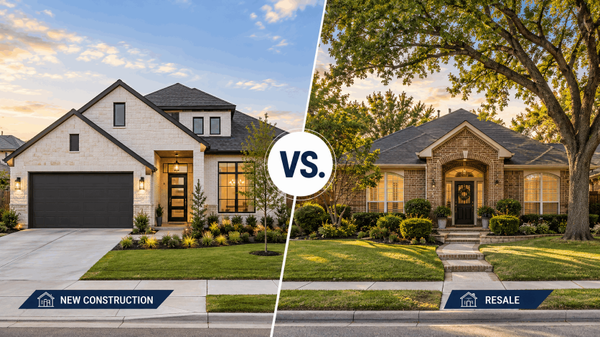
- New-construction-or-nothing buyers at family price points
- Anyone unwilling to manage taxes, inspections, and block-level diligence
- Households allergic to big-city frictions in any dose
The Bottom Line
Dallas is the highest-variance decision in this series — and the highest-ceiling one. Choose the block well, manage the taxes, run a real school strategy, and the city returns character, convenience, and culture no suburb can match at any price. Choose lazily and every con on this list finds you. Dallas doesn't average well; it specifics brilliantly. Buy the specific.
Categories
Recent Posts