Living in Cedar Hill, TX: The Honest Pros and Cons of DFW's Hill Country Suburb
Living in Cedar Hill, TX: The Honest Pros and Cons of DFW's Hill Country Suburb
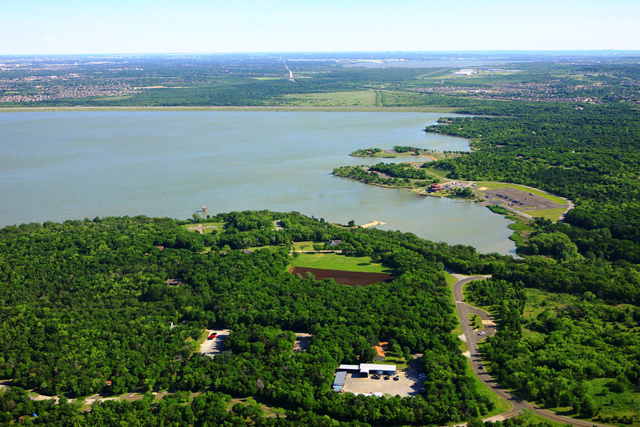
Cedar Hill is the suburb that breaks the North Texas stereotype. While most of the Metroplex is famously flat, Cedar Hill sits atop the White Rock Escarpment at one of the highest points in the region — actual hills, actual woods, a 1,800-acre state park on a 7,500-acre lake, and neighborhoods with elevation changes and tree cover that feel imported from the Hill Country. Twenty minutes from downtown Dallas, it offers a landscape-and-value combination the northern suburbs can't touch.
It also comes with southern-sector realities — school-zone homework, thinner high-end retail, and a market that rewards research. Here's the honest breakdown.
Quick Snapshot
- County: Dallas (with edges touching Ellis County)
- Population: Roughly 50,000
- Typical price range: Approximately $275,000–$450,000 across most of the market, with hilltop custom homes and Lake Ridge estates running $500,000 to well over $1 million
- School district: Cedar Hill ISD primarily; portions in Duncanville and Midlothian ISDs, plus notable charter options
- Location: US-67 corridor at the Dallas/Ellis county line, roughly 20 minutes to downtown Dallas
- Vibe: Hilly, wooded, outdoorsy, diverse, value-rich
The Pros
1. Terrain no other Dallas-area suburb can offer
Cedar Hill's escarpment geography delivers what buyers pay Hill Country prices for elsewhere: elevation, canyons, hardwood forest, and homesites with genuine views. The Lake Ridge area in particular offers winding roads, ravine lots, and custom homes on treed acreage at prices that would be laughable in the northern corridor. If topography matters to you, Cedar Hill is functionally a category of one in DFW.
2. Cedar Hill State Park and Joe Pool Lake
An 1,800-acre state park inside city limits, wrapping Joe Pool Lake with campgrounds, mountain-bike trail systems (the DORBA trails are regionally famous), swimming, fishing, and marina access. Add Dogwood Canyon Audubon Center and Cedar Ridge Preserve minutes away, and Cedar Hill residents live inside the best outdoor-recreation cluster in the southern Metroplex.
3. Twenty minutes to downtown Dallas
US-67 runs straight from Cedar Hill into the downtown Mixmaster — a commute that routinely surprises transplants who assumed affordability required an hour of driving. The 20–30 minute run (traffic depending) beats most northern-suburb equivalents at double the housing cost.
4. Serious value across every tier
Entry-level buyers find solid 1980s–2000s homes in the $200,000s–$300,000s; move-up buyers find newer construction in the $300,000s–$400,000s; and executive buyers find custom hilltop and lake-area estates at half the price of comparable northern-corridor product. The per-dollar landscape value is arguably the best in Dallas County.
5. Retail hub of the southwest sector
Hillside Village (the open-air lifestyle center) and the Uptown Village-area corridors make Cedar Hill the shopping-and-dining hub for the surrounding cities — a reversal of the usual bedroom-suburb pattern where residents drive elsewhere for everything.
6. Small-town bones with real history
A historic downtown square, the Penn Farm agricultural history site inside the state park, and long-standing community institutions give Cedar Hill an identity that predates the growth wave — plus an increasingly diverse, family-oriented population that supports strong community events and youth sports.
The Cons
1. School ratings require zone-by-zone diligence
Cedar Hill ISD offers dedicated educators and improving programs, but campus-level ratings across the district — and the neighboring zones — currently sit mid-scale rather than top-tier, and family perception of southern-sector districts lags the reality in some cases and matches it in others. Many families also weigh the area's charter options and the Midlothian ISD portions on the city's southern edge. The honest guidance: shop the specific campus, tour it, and pull live ratings rather than leaning on district-level reputation in either direction.
2. High-end dining and services still thin
Hillside Village covers the retail basics well, but destination dining, specialty grocery, and premium services still frequently mean a drive to Dallas, Arlington, or Mansfield. The gap is narrowing — newer entries prove the market demand — but northern-suburb transplants will notice it.
3. US-67 and the escarpment bottlenecks
US-67 is the lifeline, and its interchanges back up at peak; the hilly terrain limits alternate routes in ways flat suburbs don't experience. Ongoing corridor improvement projects help and disrupt in equal measure. Drive your commute at your hour before committing.
4. Block-by-block and era-by-era variation
Like most southern-sector cities, Cedar Hill's housing quality varies meaningfully between neighborhoods and construction eras. Some 1980s pockets carry deferred maintenance; some 2000s subdivisions were built to entry-level specs now showing age. Inspect hard, and evaluate the specific street.
5. Hillside living has hillside costs
The terrain that makes Cedar Hill special also complicates it: sloped lots mean drainage considerations, retaining walls that need inspection, foundation dynamics on grade changes, and (in wooded areas) tree maintenance and wildlife-interface realities. None are dealbreakers; all belong in your inspection scope and budget.
6. Insurance and hail-belt realities
Standard North Texas exposure applies, and elevated, exposed hilltop homes take weather head-on. Roof age drives premiums and insurability — quote insurance during your option period and treat roof replacement history as a negotiating item.
Cost of Ownership: The Escarpment Math
Model a $375,000 Cedar Hill home. The tax stack — city, Dallas County, Cedar Hill ISD, community college — lands in the familiar low-to-mid 2% range before exemptions, with no MUD/PID layers across the established fabric (verify on newer edge subdivisions). Insurance follows roof age; hilltop exposure argues for impact-resistant shingles, which many carriers discount. The terrain adds line items flat suburbs skip — drainage upkeep, retaining-wall attention on sloped lots — but subtracts others: mature tree cover shades summer cooling loads, and the 20-minute Dallas commute saves real fuel and toll money against exurban alternatives (US-67 is a free road, a quietly major advantage over toll-dependent corridors).
At the Lake Ridge/custom tier, budget for estate-scale realities: larger roofs, more glass, well or septic on some acreage properties (inspect both), and landscape maintenance befitting the lots. Homestead exemption files with the Dallas Central Appraisal District immediately; Dallas County protests are a worthwhile annual habit, and over-65 owners should understand the school-tax ceiling that makes Cedar Hill's single-story stock a strong aging-in-place play.
Where to Eat: 5 Cedar Hill Favorites
- Vila Brazil — A full rodizio Brazilian steakhouse in Cedar Hill with an "Exceptional" 4.8 OpenTable rating — gaucho-carved picanha without the Dallas drive.
- Babe's Chicken Dinner House (Historic Downtown) — The beloved family-style fried chicken institution anchoring Cedar Hill's old town.
- Soul Shack Bar and Grill — Chicago-born soul food with nightly live music and a retro music-era theme; the soul rolls have a regional following.
- Hillside Social — Contemporary Southern cuisine bringing an upscale option to the Hillside Village area.
- Radici Wood Fired Grill (EpicCentral, Grand Prairie) — Handmade pastas and wood-fired Italian ten minutes away at the EpicCentral entertainment district.
Golf Near Cedar Hill
Tangle Ridge Golf Club, minutes east in Grand Prairie's escarpment terrain, is the area's standout — a rolling, elevation-rich municipal championship course regularly cited among the best public values in the southern Metroplex, with a landscape that matches Cedar Hill's own. Dallas' historic Stevens Park and Cedar Crest courses are 20 minutes up US-67.
School Ratings Worth Knowing
We'll give it to you straight rather than cherry-pick: as of this writing, Cedar Hill-area campuses don't carry verified GreatSchools ratings of 7+ that we can responsibly print, and family outcomes here are driven by campus-level selection — including Cedar Hill ISD's programs (the district's Collegiate high school pathways draw genuine praise), the Midlothian ISD southern edges, and area charter options. Pull live campus ratings at GreatSchools' Cedar Hill page, tour your zoned campuses, and verify boundaries with the district — the spread between options is wide enough to reward the homework.
Frequently Asked Questions About Living in Cedar Hill
Does Cedar Hill really have hills? Genuinely — the city sits on the White Rock Escarpment at one of the highest points in North Texas, with wooded canyons, ravine lots, and elevation changes unique among Dallas suburbs. The Lake Ridge area's terrain surprises every first-time visitor.
How far is Cedar Hill from downtown Dallas? About 20 minutes via US-67 outside of peak crunch — closer than most northern suburbs at a fraction of their prices. Rush hour stretches it, like every corridor.
What is Lake Ridge? Cedar Hill's premier custom-home area: winding roads through escarpment terrain with treed lots, views, and estate homes from the $500,000s to $1 million+ — the southern sector's answer to hillside living.
Is Cedar Hill State Park worth living near? It's one of the state park system's most visited for a reason: 1,800 acres on Joe Pool Lake with camping, swimming, and the DORBA mountain-bike trail system that draws riders from across Texas. Residents treat it as a backyard.
How are Cedar Hill's schools? Varied by campus — which is why we point buyers to live campus-level ratings, tours, and the district's program details (plus the Midlothian ISD southern edges and charter options) rather than generalizations in either direction. Build the school plan alongside the house plan.
Is Cedar Hill growing? Steadily — Hillside Village's retail success, new residential on the Ellis County side, and the broader southern-sector rise are all lifting investment. The terrain naturally limits sprawl, which long-term tends to protect what makes the city distinct.
Helpful Links
- City of Cedar Hill — city services, parks, and events
- Cedar Hill ISD — boundaries, programs, and enrollment
- GreatSchools: Cedar Hill, TX — current school ratings
- Cedar Hill State Park — Joe Pool Lake camping, trails, and swimming
- Tangle Ridge Golf Club — tee times minutes away
- OnDemand Realty — Cedar Hill and Lake Ridge listings with street-level guidance
Who Cedar Hill Fits Best
- Buyers who want trees, hills, and views without leaving Dallas County
- Outdoor families who'll actually use the state park, lake, and trail systems
- Downtown Dallas commuters seeking a 20-minute affordability play
- Executive buyers targeting Lake Ridge-tier custom homes at southern-sector prices
- Value hunters willing to research schools and streets at the zone level
Who Should Look Elsewhere
- Families requiring top-rated public school zones without campus-level research
- Buyers who need premium retail and dining density inside city limits
- Anyone unwilling to budget for sloped-lot and wooded-lot ownership realities
- Northern-corridor employees for whom the cross-metro commute doesn't pencil
The Bottom Line
Cedar Hill sells something the rest of DFW physically cannot: real terrain, twenty minutes from downtown, at prices the flat-and-famous suburbs abandoned a decade ago. The trade is homework — schools by campus, streets by block, lots by slope. Buyers who do it routinely end up with more land, more trees, and more house than they thought their budget allowed. Buyers who skip it are shopping the wrong city anyway.
Categories
Recent Posts