Living in Allen, TX: The Honest Pros and Cons
Living in Allen, TX: The Honest Pros and Cons
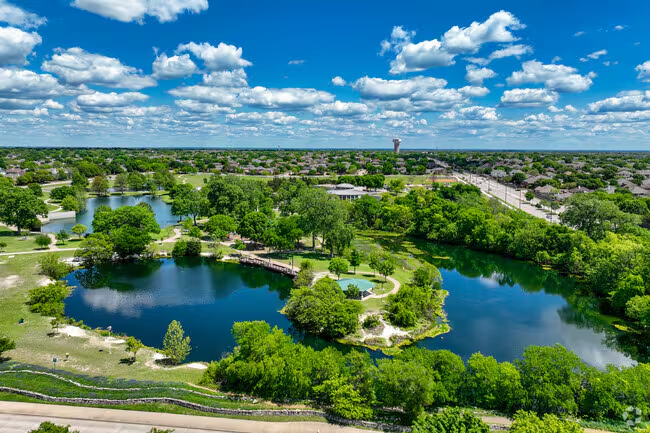
Allen sits in the heart of Collin County, wedged between Plano to the south and McKinney to the north, and for two decades it has been one of the most consistently in-demand suburbs in the entire DFW Metroplex. Ask ten North Texas families where they'd move if budget weren't the deciding factor, and Allen shows up on most of those lists. But no city is right for everyone, and Allen has real trade-offs that glossy relocation guides tend to skip.
Here's the honest breakdown from a brokerage that sells homes in Allen — and in every city surrounding it.
Quick Snapshot
- County: Collin
- Population: Roughly 110,000
- Typical price range: Approximately $400,000s for older resale up to $700,000+ in newer luxury pockets; most family homes trade in the $450,000–$650,000 band
- School district: Allen ISD (one high school for the entire city)
- Location: US-75 corridor, roughly 25 miles north of downtown Dallas
- Vibe: Established, family-first, sports-obsessed, fully built-out
The Pros
1. Allen ISD and the one-high-school identity
Allen ISD is the city's defining institution. Unlike neighboring districts split across multiple high schools, every student in Allen funnels into a single high school — Allen High — which creates a level of community identity that's genuinely rare in a city this size. Friday nights at Eagle Stadium (the famous $60 million facility) are a civic event, not just a football game. Academically, the district performs well above state averages, with strong fine arts, robotics, and career-tech programs alongside the athletics everyone talks about.
The one-high-school model also means no boundary anxiety. In Frisco or McKinney, families agonize over which attendance zone they're buying into. In Allen, if you're in the district, you know exactly where your kids are going. That certainty has real value when you're shopping.
2. Location on the Collin County spine
Allen sits directly on US-75, with Sam Rayburn Tollway (SH-121) forming its southern edge. That puts you roughly 20–30 minutes from the Legacy West/Frisco employment corridor, 35–45 minutes from downtown Dallas depending on traffic, and within easy reach of both McKinney National Airport for private aviation and DFW International via 121. For dual-income households working in different directions — one in Plano, one in McKinney — Allen is often the geographic compromise that works.
3. Retail, dining, and entertainment that punch above the city's size
Watters Creek delivers a walkable mixed-use village with restaurants and boutiques along an actual creek. Allen Premium Outlets pulls shoppers from across North Texas. The Village at Allen and the arena that anchors it host concerts, minor-league sports, and events year-round. Add The Farm — the newer 135-acre mixed-use development bringing offices, restaurants, and green space — and Allen residents rarely need to leave the city for a good dinner or a weekend outing.
4. Parks and recreation infrastructure
Celebration Park is one of the best municipal parks in DFW, full stop. The city also maintains an extensive trail network, Joe Farmer Recreation Center, The Edge skate park, and Hydrous Wake Park — an actual cable wakeboarding park inside city limits. Allen invested heavily in quality-of-life infrastructure during its growth years, and residents get the benefit of mature, well-maintained facilities rather than promises on a master plan.
5. Established neighborhoods with mature trees
Because Allen largely built out between the 1990s and 2010s, its neighborhoods have something money can't fast-forward: mature landscaping, grown-in trees, and settled streetscapes. Communities like Twin Creeks, Star Creek, and Montgomery Farm offer amenity-rich living without the raw, treeless look of brand-new subdivisions farther north.
6. Strong resale fundamentals
Allen's combination of a fixed housing supply (the city is essentially built out), a destination school district, and a central Collin County location has historically supported steady demand. Homes in Allen tend to attract deep buyer pools, and well-maintained properties in desirable neighborhoods rarely sit long in a balanced market.
The Cons
1. Property taxes are a real number
This is the Texas trade-off, and Allen is no exception. No state income tax, but combined property tax rates (city, county, school district, college district) typically land in the low-to-mid 2% range of assessed value before exemptions. On a $550,000 home, that's a five-figure annual tax bill. Homestead exemptions help meaningfully — file yours immediately — but buyers relocating from lower-tax states are often startled by the escrow line on their first mortgage statement. Always model the full PITI payment, not just principal and interest.
2. Very limited new construction
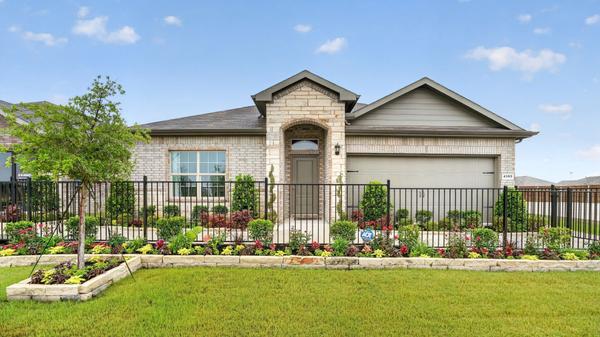
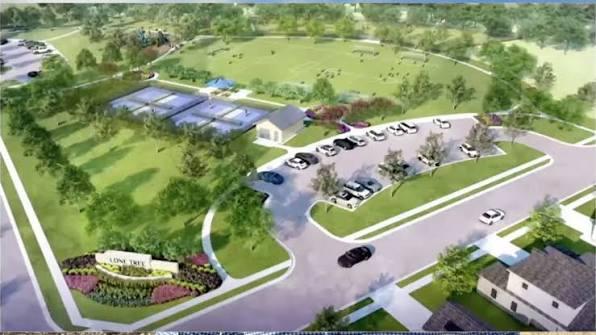
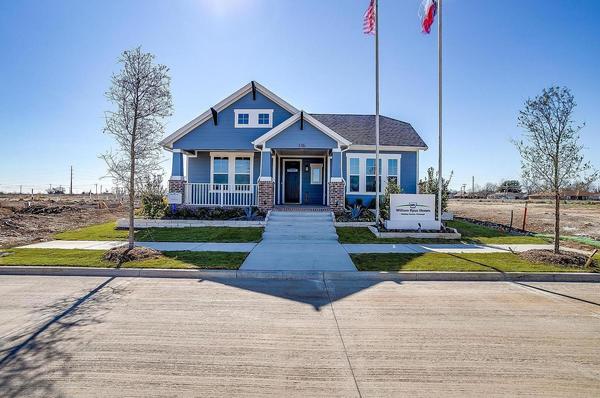
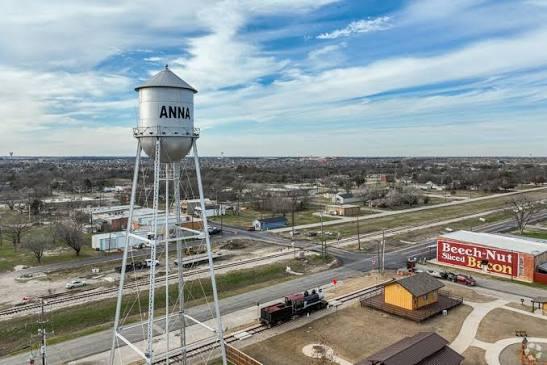
If you want a brand-new home with a builder warranty and modern floor plan, Allen will frustrate you. The city is nearly built out, and remaining new construction is limited to scattered infill and a handful of higher-priced enclaves. Buyers set on new builds typically end up looking north to Anna, Melissa, or Celina — trading Allen's maturity for new rooftops and a longer commute.
3. Aging housing stock in the western half
Much of west Allen (closer to US-75) dates to the 1980s and 1990s. These neighborhoods offer the best price points in the city, but budget for the realities of 30-plus-year-old homes: original cast iron or aging plumbing, older electrical panels, dated kitchens, and roofs and HVAC systems on their second or third replacement cycle. A thorough inspection matters more here than in newer suburbs.
4. US-75 congestion and event traffic
US-75 through Allen is one of the busiest corridors in Collin County, and rush hour southbound toward Dallas is a grind. Event nights at the arena and big weekends at the outlets add localized congestion around Stacy Road and Bethany Drive. It's manageable — Allen residents learn the backroads — but if a painless freeway commute to Dallas proper is your priority, be realistic about what 75 looks like at 7:45 a.m.
5. One high school cuts both ways
The unified identity is a pro, but a 5,000-plus-student high school isn't for every kid. Some students thrive in an environment with that many programs, teams, and course offerings; others feel lost in the crowd. Making a varsity roster at Allen High is genuinely competitive. Families who want a smaller-school experience sometimes prefer Lovejoy ISD next door or private options.
6. You pay for the reputation
Allen rarely goes on sale. Comparable square footage often costs less in Wylie, Anna, Princeton, or even parts of McKinney. You're paying a premium for schools, location, and amenities — a rational premium, but a premium nonetheless. Buyers stretching to get into Allen should make sure the total payment still leaves room to actually live.
Who Allen Fits Best
- Families who prioritize a proven school district and want zero attendance-zone guesswork
- Buyers who prefer established neighborhoods and mature trees over new construction
- Dual-career households splitting commutes across Collin County
- Sports-oriented families who'll actually use the parks, trails, and rec infrastructure
- Move-up buyers with budgets in the $450K–$700K range
Who Should Look Elsewhere
- Buyers who want a brand-new home at an entry-level price (look at Anna, Princeton, or Melissa)
- Anyone needing a short, predictable commute into downtown Dallas or Fort Worth
- Households seeking large lots or acreage — Allen lot sizes are suburban-standard
- Budget-driven buyers who can get 20% more house one or two exits north
Cost of Ownership: What Allen Actually Costs Per Month
Sticker price is only the opening bid. Here's how the real monthly math tends to shake out for a typical Allen purchase.
Take a $550,000 home — squarely in the city's family-home sweet spot. With a conventional loan and a standard down payment, principal and interest is only the beginning. Property taxes at a combined rate in the low-to-mid 2% range add roughly $900–$1,100 per month before your homestead exemption reduces the school-district portion of the taxable value. Homeowner's insurance in North Texas hail country commonly runs $250–$400+ monthly depending on roof age, deductible structure, and carrier — and roof age matters enormously here, both for premiums and insurability. Add HOA dues in amenity communities like Twin Creeks or Star Creek, and the true all-in payment can land 35–45% above the principal-and-interest number a mortgage calculator shows.
Two Allen-specific notes soften the picture. First, because most of the city's housing stock is 15–35 years old, many homes have already cycled through their first roof and HVAC replacements — ask for the dates, because a 2022 roof versus a 2010 roof changes both your insurance quote and your five-year capital plan. Second, Allen's utility and maintenance costs benefit from mature infrastructure and established trees that shade summer cooling loads; new treeless suburbs pay for that difference every August.
The exemption homework is simple and non-optional: file your homestead exemption with the Collin Central Appraisal District immediately after closing, and if you're 65 or older, the additional exemption and school-tax ceiling meaningfully change the long-term math — one reason Allen's established single-story neighborhoods quietly attract right-sizing retirees.
Frequently Asked Questions About Living in Allen
Is Allen a good place to raise a family? It's one of the strongest family propositions in DFW — a top-tier school district with zero attendance-zone guesswork, exceptional parks and recreation infrastructure, and low crime relative to metro averages. The trade-off is cost: you'll pay a premium over neighboring cities for the package.
How does Allen ISD compare to Frisco ISD or Plano ISD? All three are strong. The structural difference is Allen's single-high-school model versus Frisco's many smaller high schools and Plano's senior-high system. Allen offers unmatched program breadth and community identity at one campus; Frisco offers smaller schools and easier varsity access; Plano offers deep academic tradition. Which is "better" depends entirely on your child.
Is Allen expensive compared to nearby cities? Yes, deliberately so. Expect to pay more per square foot than Wylie, Anna, Princeton, or Melissa, and roughly comparable-to-slightly-less than west Plano and much of Frisco. You're paying for finished amenities, schools, and location — Allen rarely discounts.
What's the commute from Allen to downtown Dallas really like? Plan on 35–45 minutes at peak on US-75, sometimes worse southbound in the morning crunch through Plano. Many commuters use the Express/HOV lanes or shift hours. To the Legacy/Frisco corridor via SH-121, it's a far friendlier 20–30 minutes.
Can I still find new construction in Allen? Barely. The city is functionally built out; what remains is scattered infill and small premium enclaves. If new construction is a hard requirement, most Allen shoppers end up comparing Melissa, Anna, or Celina — and trading commute time for the builder warranty.
Is Allen a good investment? No one can promise appreciation, but Allen's fundamentals — fixed supply, destination schools, central Collin County location — have historically supported steady demand and resilient values. It behaves like a blue-chip: rarely cheap, rarely troubled.
The Bottom Line
Allen is a mature, finished product in a region full of works-in-progress. You know exactly what you're buying: top-tier schools, excellent amenities, a central location, and steady demand — priced accordingly, taxed accordingly, and with almost no new-construction escape hatch. For families who can afford the entry point, it remains one of the safest long-term bets in the northern suburbs.
If you're weighing Allen against its neighbors, that's exactly the conversation we have with buyers every week
Categories
Recent Posts