Rent vs. Buy in Plano, TX: 2026 Financial Analysis & Decision Guide
Rent vs. Buy in Plano, TX: 2026 Financial Analysis & Decision Guide
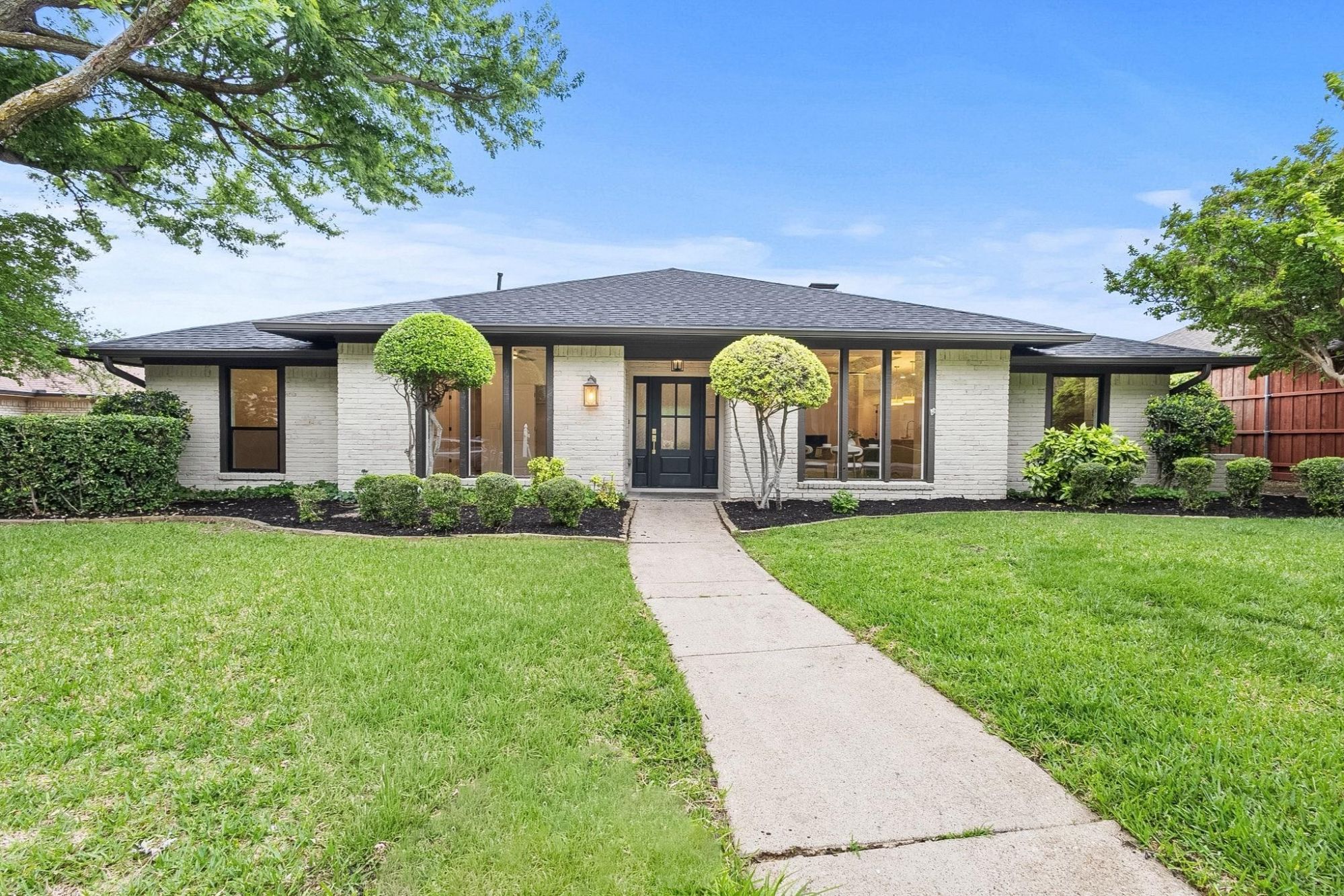
Plano is one of the most established, high-demand cities in the Dallas-Fort Worth metro — and at a median home price around $490,000, the rent-vs.-buy math here is actually more accessible than a lot of people expect. Here's an honest breakdown of what each path really costs, and how to figure out which one makes sense for your situation.
Here's the short answer: renting is still cheaper month-to-month. But the gap in Plano is narrower than it looks, and with a 5.5% rate the buying case gets meaningful faster than it does in higher-priced DFW markets like Frisco or Southlake. If you're planning to stay 3–4 years or more, the numbers shift decisively in favor of buying.
Let's look at the real figures.
Where the Plano Market Stands Right Now
As of March 2026, the median sale price in Plano is approximately $490,000 — down about 10.9% from a year ago according to Redfin, though that figure reflects mix-shift as much as genuine value decline. Zillow's home value index puts the typical Plano home at around $518,000. Either way, Plano sits meaningfully below Frisco ($710K) and Prosper ($850K+), making it one of the more attainable established cities in Collin County.
That relative affordability hasn't come at the cost of quality. Plano ISD consistently ranks among the top school districts in Texas, with an A+ Niche rating and some of the strongest academic outcomes in the DFW metro. The city's corporate infrastructure — Toyota's North American headquarters, JPMorgan Chase, Liberty Mutual, and the dense Legacy West corridor — creates stable, high-income employment that supports home values through market cycles.
On the rental side, apartment rents in Plano average around $1,687/month for a one-to-two bedroom unit (RentCafe, March 2026), which is competitive for a city at this level. The all-property-types median rent runs closer to $2,168/month (Zumper). Single-family home rentals — the relevant comparison for most buyers — typically run $2,400–$3,200/month for a 3–4 bedroom house depending on neighborhood and condition.
The Real Cost of Renting in Plano
Renting a family-sized home in Plano looks like this on a monthly basis:
| Renting a 3–4 Bed House in Plano | Monthly Cost |
|---|---|
| Rent (median 3–4 bed single-family) | $2,600 |
| Renter's insurance | $25 |
| Utilities (typically not included) | $220 |
| Total monthly outlay | $2,845 |
At $2,600/month in rent, you're spending $31,200 per year — every dollar gone permanently. Plano rents have risen roughly 3% year over year on average, meaning your housing cost will increase at your landlord's discretion. You build no equity, take no share of appreciation, and have no stability of payment.
The genuine advantages: your upfront costs are minimal (typically $5,000–$8,000 for first month, last month, and deposit), you carry zero maintenance responsibility, and you preserve flexibility. If your situation changes — job, family, relationship — you can move at the end of a lease term.
The Real Cost of Buying in Plano
Let's model two realistic purchase scenarios — one at the accessible entry level and one at the current median.
Entry-Level: $400,000 Home
This gets you a solid 3-bedroom home in older West Plano neighborhoods like Chase Oaks, Hunters Glen, or Park Forest — established areas with mature trees, larger lots, and full access to Plano ISD.
| Buying a $400,000 Home in Plano | Monthly Cost |
|---|---|
| Principal & interest (20% down, 5.5%, 30-year) | $1,817 |
| Property taxes (~1.71% effective rate, with homestead) | $500 |
| Homeowners insurance | $130 |
| HOA (estimated) | $45 |
| Maintenance reserve (1% of value annually) | $333 |
| Total monthly all-in cost | $2,825 |
At $400,000 with a 5.5% rate, your all-in monthly cost is nearly identical to renting a comparable home. The difference: roughly $350 of that first mortgage payment goes to principal — building equity — while 100% of a rent check disappears. If the home appreciates conservatively at 2.5% annually, it gains $10,000 in value in year one. By year five, you've paid down roughly $23,000 in principal and the home is worth approximately $51,000 more than you paid.
Median: $490,000 Home
At the current median, you're looking at newer construction in east Plano, Legacy-area homes, or updated properties in established neighborhoods like Willow Bend, Ridgeview Ranch, or Spring Creek.
| Buying a $490,000 Home in Plano | Monthly Cost |
|---|---|
| Principal & interest (20% down, 5.5%, 30-year) | $2,226 |
| Property taxes (~1.71% effective rate, with homestead) | $613 |
| Homeowners insurance | $160 |
| HOA (estimated) | $55 |
| Maintenance reserve (1% of value annually) | $408 |
| Total monthly all-in cost | $3,462 |
At the median price, you're paying roughly $600–$800 more per month than renting. That sounds like renting wins — until you account for what's happening on the other side of the ledger. In month one, approximately $430 of your payment goes directly to principal. Plano's 10-year median price appreciation from $292,700 (2015) to $540,000 (2024) works out to roughly 84% cumulative growth. Buyers who purchased in 2015 and rented out a room while renting elsewhere would have netted enormous gains; renters in those same years built nothing.
The 5.5% Rate Advantage
At 5.5%, you're borrowing meaningfully cheaper than the 6.1–6.4% range that has characterized the market for most buyers over the past year. On a $392,000 loan (20% down on a $490K home), that difference is roughly $230/month compared to 6.25% — or about $2,760 per year. Over five years, that's nearly $14,000 in additional cash flow staying in your pocket.
This matters because rate is one of the few variables in the buy-vs.-rent equation you can actively influence. Shopping multiple lenders, buying down the rate with points, or using a preferred lender who offers competitive pricing on DFW purchases can move the math significantly. A 5.5% rate in today's environment compresses the break-even timeline and makes the buying case considerably stronger than it was at the peak rate environment of late 2023.
The Tax Picture in Plano
Plano's combined property tax rate — Plano ISD, City of Plano, Collin County, and Collin College — totals approximately 1.71% of appraised value. That breaks down with Plano ISD accounting for roughly 61% of the total bill at $1.03955 per $100 valuation (FY 2025–26, a slight decrease from the prior year).
A few things work in Plano homeowners' favor on taxes:
- $140,000 school district homestead exemption — increased statewide in 2025. On a $490,000 home, you pay school taxes as if your home were worth $350,000. That's a significant reduction given the school rate is the largest component of your bill.
- No Collin County hospital district — unlike Dallas County (which funds Parkland Hospital) or Harris County, Collin County has no county-wide hospital district tax. This is a structural reason Plano's effective rate stays lower than many comparable Texas metros.
- Texas has no state income tax. For households earning $150,000+, this alone saves $8,000–$15,000 annually compared to states like California or New York — dramatically changing the affordability picture for anyone relocating from a high-tax state.
- Additional exemptions for seniors 65+ and disabled homeowners, including a school tax ceiling that prevents that portion from increasing even as property values rise.
The Break-Even Timeline
The most important question isn't "which costs less per month?" It's "how long do I need to stay for buying to beat renting?"
In Plano at a 5.5% rate and a $490,000 price point, the break-even framework looks like this:
- Years 1–2: Renting likely wins on pure monthly cash flow, especially when you factor in the opportunity cost of the $98,000 down payment and closing costs of roughly $8,000–$12,000. But the margin is thinner than people expect when the rate is competitive.
- Years 3–4: The gap closes quickly. Principal paydown accelerates, your fixed payment looks better and better as rents rise around you, and even modest appreciation builds real net worth. At a conservative 2.5% annual appreciation, your $490,000 home is worth approximately $554,000 by year five.
- Years 5+: Buying wins, typically by a wide margin. Your fixed P&I payment never changes while market rents compound upward. The homeowner who bought in Plano in 2019 at $350,000 is sitting on a home worth roughly $490,000 today — a $140,000 gain renters in those years never captured.
Plano median prices have grown 84% over the past decade — from $292,700 in 2015 to around $540,000 at their 2024 peak. Renters in Plano during that period built none of that wealth. Owners captured all of it.
One more consideration: unlike Frisco, which is still actively building out, Plano is a mature city with constrained land supply. There isn't a large wave of new single-family homes coming that will pressure prices. That supply constraint is a long-term tailwind for home values that favors buyers.
What Renting in Plano Makes Sense For
- You're here for fewer than 3 years. Corporate relocation, a trial run, or a transition period. Transaction costs — roughly 2–3% to buy and 6–8% to sell — eat too much of your potential gain in a short window.
- You're building toward financial readiness. If you need more time to accumulate a down payment, build credit, or stabilize income, renting while you prepare is a smart strategy — especially in a market where being in a strong financial position protects you as a buyer.
- You need maximum flexibility. Career in flux, family size uncertain, or considering a move to another part of the DFW metro in the next year or two. Renting preserves optionality.
- You want to explore Plano's submarkets first. West Plano (older, larger lots, more affordable), the Legacy corridor (walkable, newer, higher-priced), and East Plano (newer construction, Plano ISD access) all feel meaningfully different. Renting for a year while you learn the neighborhoods is reasonable before a $450K+ commitment.
What Buying in Plano Makes Sense For
- You're staying 3–4+ years. At a 5.5% rate and Plano's price point, the math tilts toward buying sooner than in most other DFW cities.
- School-age children are in the picture. Plano ISD is one of the primary drivers of home values here. Buying inside the district locks in access and positions you to benefit from the appreciation those schools support.
- You want payment stability. A fixed-rate mortgage is a 30-year hedge against rent inflation. Plano rents have generally trended upward over time — your landlord's patience is not guaranteed to extend indefinitely.
- You're relocating from a high-cost market. Buyers moving from California, the Pacific Northwest, or the Northeast often find Plano dramatically more affordable on an after-tax basis. A $490,000 home in a top school district with no state income tax looks very different from $490,000 in many coastal markets.
- You want to build wealth, not pay someone else's mortgage. Plano's long-term appreciation history is real and well-documented. Every year you delay buying in an established, supply-constrained market is a year you're building equity for your landlord instead of yourself.
The honest bottom line: At a 5.5% rate, the rent-vs.-buy gap in Plano is about as narrow as it gets in a high-demand DFW market. The monthly premium for owning versus renting a comparable home is real but manageable — and it buys you equity, price appreciation in a supply-constrained city, Plano ISD access, and a fixed payment in a rising-rent environment.
If you're staying 3+ years and financially ready, buying in Plano right now is a strong decision. If you're unsure about your timeline or still building toward readiness, rent smart, move deliberately, and don't rush into the largest purchase of your life.
A Note on Getting Pre-Approved
At Plano's price points, getting a real pre-approval before you start seriously shopping is essential. Sellers here — especially on well-priced homes that move in 20–30 days — expect to see documented financials, not a soft pre-qualification. A full pre-approval also gives you a concrete monthly payment figure, which makes the rent-vs.-buy comparison specific to your income, credit, and loan structure rather than theoretical.
Our preferred lending partner is Greg Pope at Clarity Home Lending (NMLS #621901, Plano, TX). Greg is Plano-based, works extensively with buyers across Collin County, and can typically turn a full pre-approval around quickly. He's also a strong resource for understanding how conventional, FHA, and VA loan structures affect your monthly cost and long-term break-even — particularly relevant if you're deciding between a smaller down payment and preserving cash.
Frequently Asked Questions
Is it cheaper to rent or buy in Plano, TX right now?
On a monthly basis, renting a comparable home is somewhat cheaper in the short term. A 3–4 bedroom rental in Plano runs roughly $2,400–$2,800/month, while the all-in cost of buying at the median price is approximately $3,400–$3,500/month. However, the gap is narrower than in many DFW markets at a 5.5% rate — and buying builds equity while renting does not.
What is the median home price in Plano, TX in 2026?
As of March 2026, the median sale price in Plano is approximately $490,000 (Redfin). Zillow's home value index puts the typical home around $518,000. Entry-level homes in older West Plano neighborhoods can be found in the $350,000–$400,000 range.
How long do I need to stay in Plano for buying to make sense?
At current prices and a 5.5% rate, the break-even is approximately 3–4 years — shorter than most high-priced DFW markets. If you're confident you'll stay 4+ years, buying is almost always the stronger financial decision in Plano.
What are property taxes in Plano, TX?
The combined property tax rate in Plano — Plano ISD, City of Plano, Collin County, and Collin College — totals approximately 1.71% of appraised value. Homeowners who occupy their home as a primary residence benefit from the $140,000 school district homestead exemption (2025) and applicable city exemptions. Collin County's lack of a hospital district keeps the total rate lower than most large Texas counties.
What does it cost to rent a house in Plano, TX?
Apartment rents in Plano average around $1,687/month for a 1–2 bedroom unit (RentCafe, March 2026). Single-family home rentals run $2,400–$3,200/month for a 3–4 bedroom house. The all-property-types median rent is approximately $2,168/month (Zumper).
How much do I need to earn to buy a home in Plano?
Using the standard 28% housing ratio on a $490,000 home with 20% down at 5.5%, you'd need a household income of roughly $148,000 to stay comfortably within conventional lending guidelines. Plano's median household income is approximately $100,000–$110,000, so median-priced homes require above-median income — but are still more accessible than Frisco or Prosper at current rate levels.
How does Plano compare to Frisco for buyers?
Plano has a lower median price ($490K vs. $710K), a more mature housing stock with established neighborhoods and larger lots, and a slightly lower combined property tax rate. Frisco offers newer construction and more price appreciation runway, but requires significantly higher income to qualify. Plano is generally the better choice for buyers who prioritize value, school access, and a shorter commute to major employers.
Does Plano ISD affect home values?
Significantly. Plano ISD is one of the top-rated school districts in Texas, with an A+ Niche rating and consistently high academic performance across all campuses. School district quality is one of the primary drivers of long-term home value stability in Plano — and one of the reasons the market has held up well through multiple rate environments.
What Plano neighborhoods are best for first-time buyers?
West Plano neighborhoods like Hunters Glen, Chase Oaks, Park Forest, and Cross Creek offer the most attainable price points — often $350,000–$430,000 for a 3-bedroom home — with full access to Plano ISD and mature, established surroundings. Buyers who want newer construction typically look toward East Plano or communities closer to the Legacy corridor, but at higher price points.
Should I buy in Plano if I'm relocating to DFW from another state?
Plano is one of the top landing spots for out-of-state corporate relocations for good reason — established infrastructure, top schools, central DFW location, and a mature housing market that doesn't require navigating new construction timelines. Buyers from California, the Pacific Northwest, or the Northeast typically find Plano's prices very manageable relative to their home markets, particularly with Texas's zero state income tax factored in. Renting for 6–12 months first to learn the west vs. east Plano distinction before buying is a reasonable approach.
Categories
Recent Posts