Rent vs. Buy in Frisco, TX: 2026 Financial Analysis & Decision Guide
Rent vs. Buy in Frisco, TX: 2026 Financial Analysis & Decision Guide
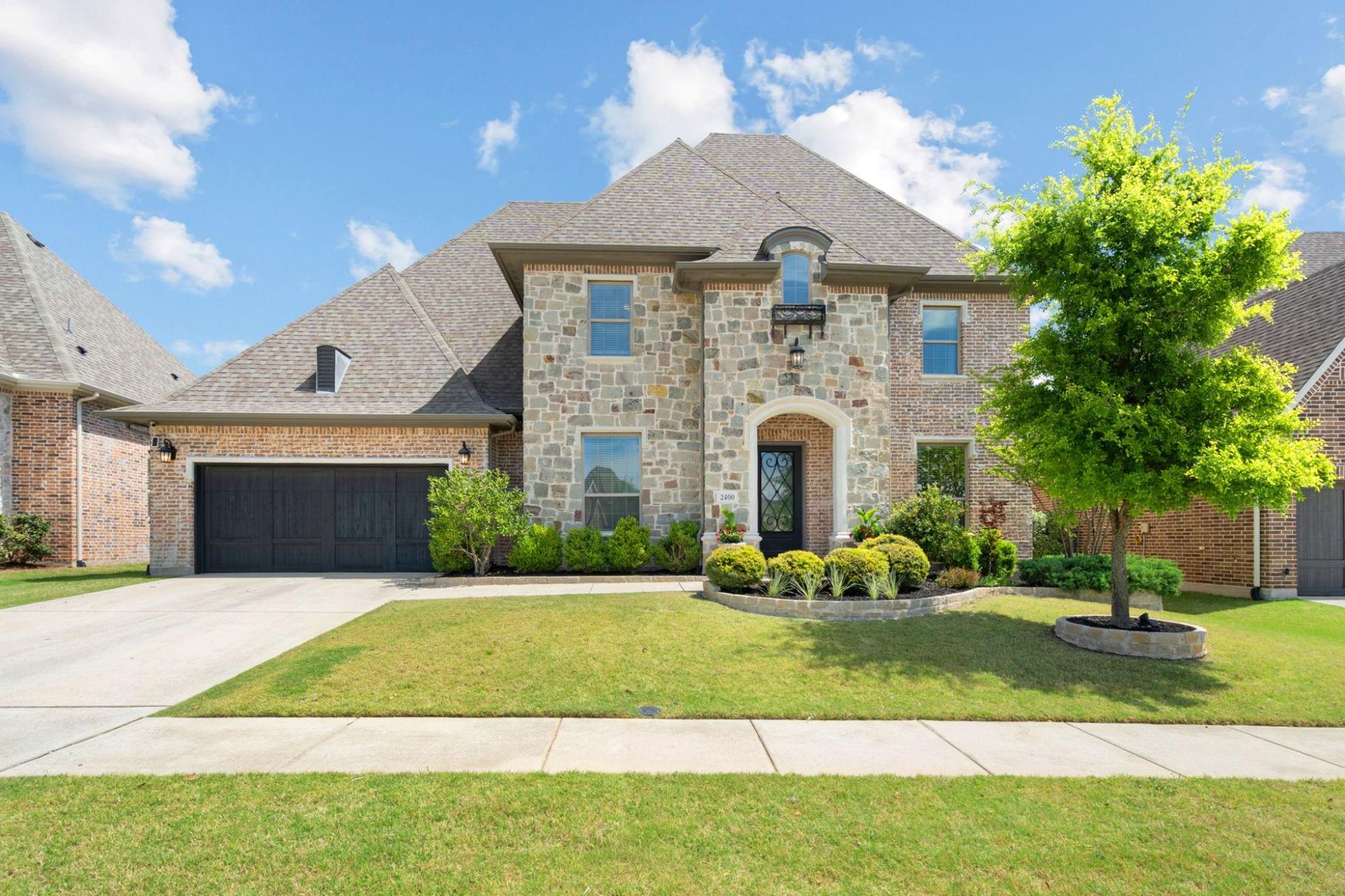
Frisco has one of the highest median home prices in the Dallas-Fort Worth area. That makes the rent-vs.-buy question more loaded here than almost anywhere else in North Texas. Here's an honest look at the real numbers — and how to figure out which decision actually makes sense for your situation.
I'll give you the short version first: renting is cheaper month-to-month right now. But buying beats renting financially if you stay long enough — and in Frisco, where appreciation has been strong and the school district alone drives demand, "long enough" is typically 4 to 6 years. Everything else depends on your life.
This guide breaks down both sides with real current numbers, not hypotheticals. Let's get into it.
Where the Frisco Market Stands Right Now
As of March 2026, the median sale price of a home in Frisco is approximately $710,000, according to Redfin — down about 1.6% from a year ago. Zillow's home value index puts the typical Frisco home value at around $674,000. Either way, Frisco remains the most expensive major city in the DFW metro, well above McKinney ($530K), Allen, Plano, or Dallas proper.
That hasn't dampened long-term demand. Frisco ISD consistently ranks in the top 2% of school districts in Texas, the corporate job base (Toyota, PGA of America, the FC Dallas and Dallas Cowboys complexes) keeps employment strong, and the population has exploded from 33,000 in 2000 to over 230,000 today. These fundamentals haven't gone anywhere.
On the rental side, average apartment rents in Frisco run about $1,750–$1,800 per month — surprisingly affordable for a city at this price point. Single-family home rentals are a different story: 3–4 bedroom houses typically rent for $2,800–$4,000/month depending on size, neighborhood, and condition.
Mortgage rates are currently hovering around 6.1–6.4% on a 30-year fixed loan as of April 2026, which meaningfully affects the buying math compared to the 3% rate environment of 2021.
The Real Cost of Renting in Frisco
Most people underestimate the true cost of renting because they only count the rent check. Here's what renting actually looks like on a monthly basis for a family-sized home in Frisco.
| Renting a 3–4 Bed House in Frisco | Monthly Cost |
|---|---|
| Rent (median 3–4 bed single-family) | $3,200 |
| Renter's insurance | $30 |
| Utilities (not included in most rentals) | $250 |
| Total monthly outlay | $3,480 |
At $3,200/month in rent, you're spending $38,400 per year — and every dollar leaves your balance sheet permanently. You build no equity, you have no control over rent increases (Frisco rents have risen year over year), and you can't benefit from appreciation in one of Texas's strongest real estate markets.
One real advantage: your upfront costs are minimal. First month, last month, and a security deposit — typically $5,000–$10,000 total — versus $140,000+ as a down payment on a median-priced home.
The Real Cost of Buying in Frisco
Let's model a realistic purchase scenario at the lower end of the Frisco market — a $550,000 home, which gets you a solid 3–4 bedroom house in areas like The Trails, Eldorado, or some of the older established neighborhoods on the western side of the city.
| Buying a $550,000 Home in Frisco | Monthly Cost |
|---|---|
| Principal & interest (20% down, 6.25%, 30-year) | $2,710 |
| Property taxes (~1.7% effective rate, with homestead) | $775 |
| Homeowners insurance | $175 |
| HOA (varies; estimate for established neighborhood) | $60 |
| Maintenance reserve (1% of value annually) | $458 |
| Total monthly all-in cost | $4,178 |
That's roughly $700 more per month than renting a comparable home — before accounting for the $110,000 down payment you've deployed. But here's what those numbers don't show: in month one, approximately $420 of that P&I payment goes directly toward your loan principal. By year five, you've paid down roughly $28,000 in principal, and if the home appreciates conservatively at 2.5% annually, it's worth about $62,000 more than you paid for it.
Now let's look at the median price point.
| Buying a $710,000 Home in Frisco | Monthly Cost |
|---|---|
| Principal & interest (20% down, 6.25%, 30-year) | $3,500 |
| Property taxes (~1.7% effective rate, with homestead) | $1,000 |
| Homeowners insurance | $220 |
| HOA | $75 |
| Maintenance reserve | $592 |
| Total monthly all-in cost | $5,387 |
At the median, you're looking at a $5,387 all-in monthly cost — significantly more than renting. The income required to comfortably carry this payment (using the 28% housing ratio guideline) is around $230,000 annually. That's a realistic household income for Frisco — the city's median household income tops $140,000 — but it narrows the buyer pool considerably.
The Tax Picture: A Significant Advantage for Buyers
Texas has no state income tax. That's the headline. For a household earning $200,000 in a state like California or New York, the state income tax bill alone would run $15,000–$25,000 per year. In Texas, that's $0. This fundamentally changes the affordability math for buyers relocating from high-tax states.
Frisco homeowners also benefit from meaningful homestead exemptions:
- City of Frisco homestead exemption: 20% — the maximum allowed by Texas law, increased in 2025. The city tax rate is $0.425517 per $100 of valuation.
- Frisco ISD school district exemption: $140,000 — also increased in 2025 statewide. The school district portion is typically the largest component of the property tax bill, so this is meaningful.
- Additional exemptions for homeowners 65+ or with disabilities, including a school tax ceiling that prevents that portion from increasing even as values rise.
The combined effect for a primary residence reduces the effective property tax burden considerably compared to the posted rate. Texas homeowners cannot deduct mortgage interest or property taxes at the state level — because there is no state income tax — but the federal mortgage interest deduction still applies for itemizing filers.
The Break-Even Timeline
The most important question in any rent-vs.-buy analysis isn't "which is cheaper per month?" It's "how long do I need to stay for buying to beat renting financially?"
Here's the rough framework for Frisco at current prices and rates:
- Years 1–2: Renting almost certainly wins on pure cash flow. The higher monthly cost of buying, combined with transaction costs (closing costs typically run 2–3% on the buy side), means you're in the hole compared to a renter who invested their down payment elsewhere.
- Years 3–4: The gap begins to close. Equity accumulation picks up, appreciation compounds, and the renter's monthly costs have likely risen with annual rent increases while the homeowner's principal and interest payment is fixed.
- Years 5+: Buying typically wins, often by a significant margin in Frisco specifically. The combination of strong appreciation history, a locked mortgage payment, and principal paydown creates substantial net worth that renting simply cannot replicate.
Frisco home values have appreciated significantly over the long term despite recent softening — homes that sold for $450,000 in 2016 commonly sell for $650,000–$750,000 today. Renters in those same years built nothing from that run.
The break-even horizon also shortens if rates drop and you refinance. A homeowner who buys today at 6.25% and refinances in 2–3 years at 5% saves $400–$600/month and accelerates the break-even point substantially.
What Renting in Frisco Makes Sense For
Renting isn't a bad financial decision in every situation. In Frisco specifically, it makes sense if:
- You're here for fewer than 3 years. Corporate relocation, a temporary assignment, or a lifestyle try-out. Transaction costs alone eat too much of your potential equity gain in a short window.
- You're not yet financially ready to buy. If you don't have 5–20% down, 3–6 months of reserves, and strong credit, renting gives you time to build toward a position of strength.
- You need flexibility. Career uncertainty, growing family with undetermined school needs, or a partner whose job situation is in flux — these are all legitimate reasons to preserve optionality.
- You want to learn the submarkets first. Frisco has meaningfully different neighborhoods — Phillips Creek Ranch vs. Stonebriar vs. Lawler Park vs. the western suburbs near Little Elm. A year of renting while you learn the city is a reasonable investment before a $600K+ commitment.
What Buying in Frisco Makes Sense For
Buying makes strong sense if:
- You're staying 4–5+ years. The math tilts decisively in favor of buying as your time horizon extends.
- You have children in — or approaching — school age. Frisco ISD is one of the primary drivers of home values here. Owning inside the district locks in access to those schools and the equity appreciation that comes with living in a top-tier district.
- You can lock in a fixed payment. In an environment where rents continue to rise, a fixed-rate mortgage is a hedge. Your P&I never increases. Your landlord's patience with flat rent is finite.
- You're relocating from a high-cost market. If you're moving from California, New York, or the Pacific Northwest, buying in Frisco likely looks dramatically more affordable on an after-tax basis, even at $600,000–$750,000.
- You want to participate in the market, not just watch it. Every year you delay buying in a market like Frisco is a year you're renting someone else's appreciating asset.
The honest bottom line: Renting is cheaper month-to-month in Frisco right now. But if you're planning to stay 4+ years, buying is almost always the better long-term financial decision — especially with Frisco's school district fundamentals, corporate job base, and long-term appreciation history working in your favor.
The real risk isn't buying. It's buying the wrong home in the wrong neighborhood at the wrong price. That's where working with an agent who knows these submarkets makes the actual difference.
A Note on Getting Pre-Approved
Before any serious home search in Frisco, get a real pre-approval — not a pre-qualification. At these price points, sellers expect to see it. A pre-approval also tells you exactly what you can borrow, what your rate will be, and what your actual monthly payment looks like, which makes the rent-vs.-buy math concrete rather than theoretical.
Our preferred lending partner is Greg Pope at Clarity Home Lending (NMLS #621901, Plano, TX). Greg works extensively with buyers in Frisco and the broader Collin County market and can typically turn around a full pre-approval quickly. He's also a resource for understanding how different loan structures — conventional, FHA, VA — affect your monthly payment and long-term cost.
Frequently Asked Questions
Is it cheaper to rent or buy in Frisco, TX right now?
On a monthly cash flow basis, renting is cheaper in the short term. A 3–4 bedroom rental home in Frisco runs $2,800–$3,500/month, while the all-in cost of buying a comparable home at the median price runs $4,500–$5,400/month. However, buying builds equity and historically outperforms renting if you stay 4–5+ years.
What is the median home price in Frisco, TX right now?
As of March 2026, the median sale price in Frisco is approximately $710,000 (Redfin). Zillow's home value index shows a typical home value around $674,000. Entry-level homes start in the low-to-mid $400s, primarily in older areas or townhome communities.
How long do I need to stay in Frisco for buying to make financial sense?
At current prices and rates, the typical break-even point is 4–6 years. If you're confident you'll stay at least 5 years, buying is almost always the better long-term financial decision in this market.
What are property taxes in Frisco?
The combined property tax rate in Frisco (city, Frisco ISD, Collin County, and Collin College) runs approximately 1.7–1.8% of appraised value. Homeowners who file for the homestead exemption receive a 20% city exemption and a $140,000 school district exemption, meaningfully reducing the taxable base. Texas has no state income tax, which partially offsets the property tax burden.
What does it cost to rent a house (not an apartment) in Frisco?
Single-family home rentals in Frisco typically run $2,800–$4,000/month for a 3–4 bedroom home, depending on neighborhood, condition, and square footage. Apartment rents are considerably lower, averaging around $1,750–$1,800/month for a 1–2 bedroom unit.
How much do I need to make to buy a median-priced home in Frisco?
Using the standard 28% housing ratio on a $710,000 home with 20% down at 6.25%, you'd need a household income of roughly $225,000–$230,000 to be comfortably within conventional lending guidelines. Frisco's median household income is approximately $140,000, so median-priced homes here require above-median income.
Should I buy or rent in Frisco if I'm relocating from out of state?
Many out-of-state buyers — especially those coming from California, the Pacific Northwest, or the Northeast — find Frisco homes affordable relative to their previous markets even at $600K–$800K, particularly when factoring in Texas's lack of state income tax. That said, renting for 6–12 months first to learn the specific neighborhoods and submarkets before committing to a purchase is a reasonable strategy.
What are current mortgage rates for a Frisco home purchase?
As of April 2026, 30-year fixed mortgage rates are averaging approximately 6.1–6.4%. Rates have been volatile and are influenced by broader economic conditions, including the Federal Reserve's policy trajectory. Well-qualified buyers may find rates at the lower end of that range or below by shopping multiple lenders.
Does Frisco ISD affect home values?
Significantly. Frisco ISD consistently ranks in the top 2% of school districts in Texas and the United States, with a graduation rate near 99% and an A+ rating from Niche. School district quality is one of the primary drivers of home value stability in Frisco — and one of the reasons demand has remained durable despite high prices.
What neighborhoods in Frisco are more affordable for first-time buyers?
The most attainable price points in Frisco tend to be in older neighborhoods on the western side of the city — Eldorado, The Trails at Stonebriar, and some areas near Preston Road and Eldorado Parkway. Townhome communities and attached product also offer entry points in the $400K–$500K range. Newer communities on the eastern and northern edges of the city (near the PGA development and Little Elm border) tend to be higher-priced.
Categories
Recent Posts