Lantana, TX: The Complete Buyer's Guide — Community Life, Schools & the HOA Fee Charged at Closing
Lantana, TX: The Complete Buyer's Guide — Community Life, Schools & the HOA Fee Charged at Closing
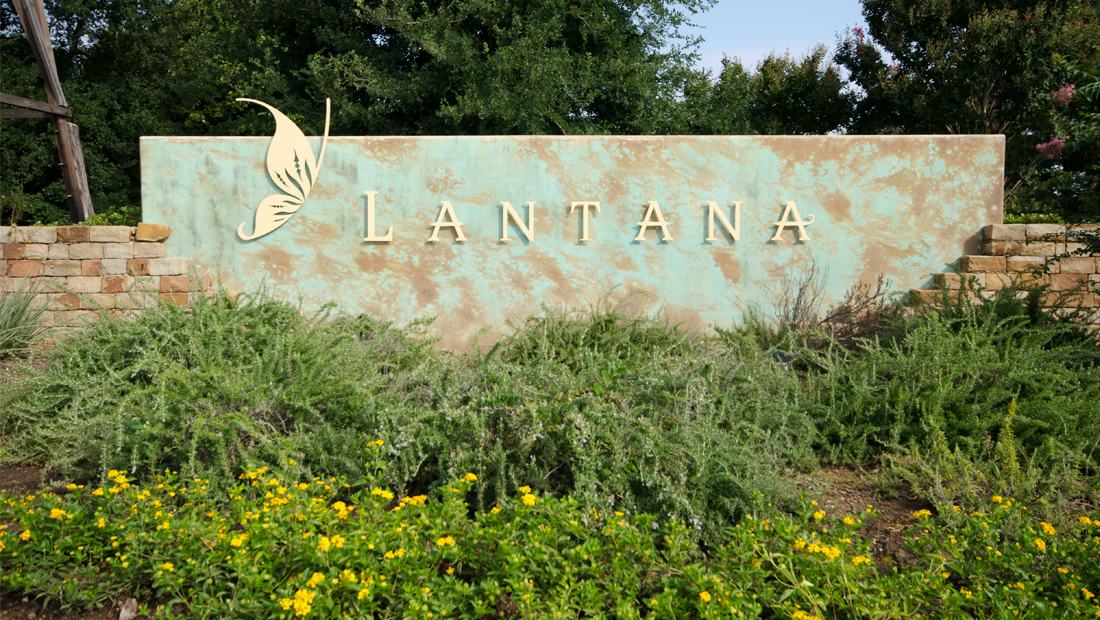
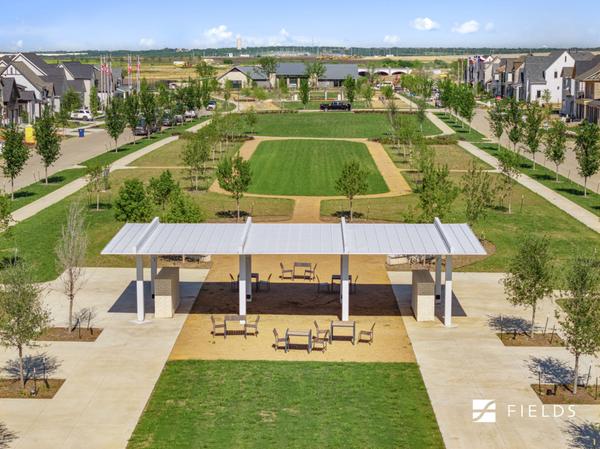
If you're considering buying a home in Lantana, Texas, you've probably already fallen in love with the community's curb appeal, the manicured trail systems, the resort-style pools, and the reputation that makes it one of North Texas's most decorated master-planned neighborhoods. What you may not have gotten a straight answer on yet is the fees charged at closing — plural — that most buyer's agents never mention until you're reading the closing disclosure.
There are two separate closing charges unique to Lantana that every buyer needs to understand before writing an offer. The first is the HOA capital contribution charged by the Lantana Community Association. The second — and the larger of the two on most transactions — is a 0.5% fee on the purchase price paid to the Lantana Education & Charitable Foundation, a 501(c)(3) nonprofit that has funded millions of dollars in school and community investment since 2000. On a $625,000 home, that foundation fee alone is over $3,100.
That's what this guide is for. We'll cover the community in full, but we're not going to bury these questions at the bottom. Buyers deserve complete fee transparency before they're three days from closing.
What Is Lantana, Texas?
Lantana is an upscale, master-planned census-designated place (CDP) located in unincorporated Denton County, approximately 8 miles south of the city of Denton. Development began in 1999 under Republic Property Group, in partnership with Forestar Group, and the first residents moved in around 2001. Today the community spans roughly 1,780 acres and is home to an estimated 10,000 to 15,000 residents across approximately 4,000 single-family homes at build-out.
Lantana shares the 76226 ZIP code with Argyle and sits adjacent to Bartonville. It is not an incorporated city — that distinction matters for buyers, because it affects everything from how fire services are funded to how the HOA is governed under Texas law.
In 2004, 2006, 2011, and 2012, Lantana won the People's Choice Award for Community of the Year at the Dallas Homebuilders Association McSAM Awards. That's not marketing copy — it's a genuine indicator of what makes Lantana different from a standard DFW suburb. The community was purpose-built around an 18-hole private golf course, connected trail systems, multiple amenity centers, and a homeowners association that provides services most subdivisions simply don't offer.
Demographically, Lantana skews affluent and educated. Roughly one quarter of households report annual income above $150,000, and another 34% report incomes between $75,000 and $150,000. Nearly half of adult residents hold a bachelor's degree or higher. Those numbers matter to buyers because financial stability among homeowners directly affects the health of the HOA — fewer delinquencies, better reserve funding, and lower risk of surprise special assessments down the road.
Community Snapshot
- Total acreage: 1,780 acres
- Homes at build-out: approximately 4,000 single-family residences
- Estimated population: approximately 10,000–15,000 residents
- ZIP code: 76226 (shared with Argyle)
- County: Denton (unincorporated)
- Distance to Denton: 8 miles
- Distance to DFW Airport: approximately 16 miles
- Distance to Medical City Denton: approximately 8 miles
- Median home price: approximately $625,000 (2025–2026 market data)
Neighborhoods and Villages Inside Lantana
Lantana is not a single subdivision. It's a collection of distinct villages and neighborhoods, each with its own character, pricing, and proximity to the central amenities. Understanding which village a specific home sits in affects your walk score to the pool, your proximity to the golf course, your lot size, and your overall feel of the community.
Some of the most recognized neighborhoods within Lantana include Larkspur, one of the original villages and home to the weather camera that frequently appears on KDFW. Bandera is known for larger lots and upscale homes and attracts move-up buyers looking for more space. Madison is the northernmost neighborhood, closest to Guyer High School and the Denton city boundary. The original core neighborhoods — including Bellaire and Kingsbridge, among others — tend to feature denser lots, stronger walkability to parks and pools, and generally lower price points than the outer edges of the community.
Adjacent communities like Copper Canyon, Double Oak, and Taylor Oak are geographically close to Lantana but are separate entities. These areas feature acre-plus lots and homes that regularly exceed $1 million. They may or may not carry Lantana HOA membership and amenity access — a critically important distinction for buyers.
Buyer warning: Not every home marketed as being "near Lantana" or "in the Lantana area" is actually within the Lantana Community Association. Homes in Bartonville or Copper Canyon may not have access to Lantana's amenities and will not be subject to the Lantana HOA's fee structure. Always verify HOA membership on the resale certificate — not just the MLS listing description.
Amenities: What You're Actually Getting for Your HOA Dues
One of Lantana's strongest selling points is the genuine depth of what residents receive for their HOA assessments. This is not a bare-bones association that mows an entry monument and enforces fence heights. The Lantana Community Association funds a resort-caliber amenity package that meaningfully offsets what homeowners would otherwise pay out of pocket for many of these services.
Included in Lantana HOA dues:
- Front yard maintenance — mowing, edging, and basic landscaping of the front yard. A service that would cost $100–$150 per month if purchased separately.
- High-speed internet service — bundled broadband for all residents, included in the assessment.
- Security monitoring and system installation — community-wide security infrastructure.
- Five community pools — across multiple amenity centers, including the North and South Amenity Centers.
- Two splash pads — serving younger families.
- Basketball and tennis courts.
- Fitness centers at multiple amenity center locations.
- Miles of hike-and-bike trails winding through the community's greenbelts and open spaces.
- Parks and playgrounds throughout the community, including Mustang Park and Mesquite Park.
- Annual contribution to the Argyle Volunteer Fire Department (AVFD) — because Lantana sits in unincorporated Denton County, fire and EMS service is provided through an HOA-funded annual agreement with the AVFD rather than a municipal fire department.
- Community events programming — outdoor concerts, chili cook-offs, seasonal festivals, fitness classes, and various resident clubs.
Not included in HOA dues: golf club membership (separate membership required at Lantana Golf Club), back yard maintenance, individual home exterior maintenance, and Fresh Water Supply District (FWSD) charges — which appear as a separate tax line item on your Denton County property tax statement.
That AVFD line item is worth understanding. Because Lantana is unincorporated, it is not served by a municipal fire department. The HOA funds the community's fire and EMS service contractually through the Argyle Volunteer Fire Department. This is a legitimate and well-established arrangement, but it means fire service is paid through your HOA assessment rather than municipal taxes — another reason why the HOA is more expensive here than in a standard incorporated city subdivision.
Schools Serving Lantana
The core Lantana CDP is zoned to Denton Independent School District. This is a point of frequent confusion — some online listings and third-party sites incorrectly identify Lantana homes as Argyle ISD. For most addresses within the Lantana community, Denton ISD is the correct district. If Argyle ISD is a specific priority for your family, verify the exact address with the district directly before writing an offer. Do not rely solely on MLS data.
Elementary schools serving Lantana:
- Dorothy Adkins Elementary — Denton ISD, opened August 2014, Recognized rating
- Eugenia Porter Rayzor Elementary — Denton ISD, the first school built in the community (opened 2002), Exemplary rating
- Annie Blanton Elementary — Denton ISD, opened August 2008, Exemplary rating
Middle school:
- Tom Harpool Middle School — Denton ISD, Recognized rating, Niche grade A
High school:
- John H. Guyer High School — located in southern Denton, approximately 3 miles north of Lantana's northernmost neighborhood, Niche grade A, appeared on U.S. News & World Report's list of best high schools in the United States in 2023
Denton ISD as a district earns an overall A-minus on Niche. The district is known for a strong fine arts emphasis and has direct ties to Denton's vibrant arts and music scene. Guyer's award-winning theater program is particularly notable at the high school level.
Lantana residents also pay an annual fee through the Lantana Community Association to the AVFD — and separately, most of Denton County (including Lantana) falls within the boundary of North Central Texas College for community college access.
How the Lantana HOA Is Structured
The governing body for Lantana is the Lantana Community Association — a mandatory membership homeowners association that every buyer automatically joins upon purchasing a home within the community. Membership is not optional. It is embedded in the restrictive covenants attached to every lot, meaning a seller cannot transfer the property without the buyer accepting HOA membership and all obligations that come with it.
The Lantana Community Association is professionally managed by Insight Association Management, headquartered at 2400 Lakeside Blvd., Suite 550, Richardson, TX 75082 — reachable at (214) 494-6002. Insight handles daily operations including assessment billing, resale certificate preparation, Architectural Review Committee (ARC) applications, and maintenance coordination.
The Board of Directors meets monthly in open session at the Bartonville Town Square. The community is currently transitioning from a developer-controlled board to a fully resident-elected Board of Directors — a milestone triggered when a Texas community reaches a certain size threshold under state law.
Lantana is also located within Development District #4, Fresh Water Supply District #6, and Fresh Water Supply District #7. These are separate political subdivisions of the State of Texas authorized to provide water, sewage, and drainage services. They are governed by elected boards and funded by special district taxes — not HOA dues — that appear as additional line items on your annual Denton County property tax statement. New buyers are frequently surprised to see these charges on their closing disclosure and tax bills. Budget for them.
The Lantana Education & Charitable Foundation — and the 0.5% Transfer Fee Every Buyer Pays
Here is something almost no buyer's agent in DFW talks about upfront, and it absolutely should be part of every Lantana buyer conversation: when you purchase a home in Lantana, you are not just paying an HOA capital contribution to the Lantana Community Association. You are also paying a separate 0.5% fee on the purchase price to the Lantana Education & Charitable Foundation (LECF) — a 501(c)(3) private foundation funded entirely by real estate transfer revenue within the community.
This is a meaningful dollar amount. On a $625,000 home, that's $3,125. On a $750,000 home, it's $3,750. It is not a scam, it is not junk fee — it is a legitimate and legally structured charitable levy that has funded millions of dollars in school and community investment since the foundation was created in May 2000. But buyers need to know it's coming.
What is the LECF?
The Lantana Education & Charitable Foundation was originally established by the developers — Republic Property Group and Forestar Group — and is now managed by Lantana Cares, a local 501(c)(3) nonprofit. The foundation's stated mission is to fund activities and infrastructure that support quality of life within Lantana, including educational, cultural, recreational, environmental, and conservation initiatives that directly benefit either the community itself or schools whose attendance zones include Lantana.
Grants from the LECF must benefit Lantana, Texas or schools with an assigned attendance zone in Lantana. The foundation does not fund projects outside the community.
How it's funded:
Every real estate sale or transfer within Lantana triggers a one-half of one percent (0.5%) fee on the sale price, which flows directly to the LECF. This is separate from and in addition to your HOA capital contribution. The fee is structured into the real estate transaction and disclosed through the closing process.
2024 Financials — From the Official Form 990-PF:
The LECF files Form 990-PF with the IRS annually, and the 2024 return is publicly available. Here is what it shows:
- Total revenue for 2024: $616,269 — driven almost entirely by the 0.5% transfer fee on Lantana home sales
- Total grants and charitable disbursements paid in 2024: $863,116
- Total operating and administrative expenses (non-grant): $13,318 — accounting fees, insurance, office expenses, and bank charges. The foundation runs lean.
- Total assets as of year-end 2024: $616,269
The foundation disbursed significantly more in grants than it took in during 2024 — drawing down reserves accumulated in prior years — a sign of active community investment rather than a foundation sitting on cash.
Where the 2024 grants went:
The foundation's 2024 Form 990-PF discloses every grant recipient. In the most recent reporting year, the LECF directed $863,116 to Lantana schools and community organizations, including:
- Blanton Elementary School: $184,500
- Guyer High School: $134,695
- EP Rayzor Elementary School: $140,000
- Harpool Middle School: $61,943
- Lantana Cares (community programs): $252,978
- Guyer Silverado Booster Club: $10,000
- Additional school and community grants: $79,000
Every grant is designated for operation, organization, and development purposes within the Lantana community. No grant funds flow outside of Lantana or its schools.
Why this matters for buyers:
The 0.5% LECF transfer fee is a buyer cost — not a tax and not an HOA charge — but it functions as a closing line item that directly impacts how much cash you need to close. On a $600,000 home, you're looking at $3,000. On an $800,000 home, it's $4,000. This is real money that many buyers don't learn about until they're reviewing the closing disclosure.
More practically: this fee is one of the reasons Lantana schools consistently punch above their weight in terms of programs, facilities, and extracurricular support. The foundation has invested millions into E.P. Rayzor, Blanton, Adkins, Harpool, and Guyer over more than two decades. When you pay the 0.5% at closing, you are directly funding the school infrastructure that helps make Lantana worth buying into.
For more information on the LECF, visit www.lantanaecf.org.
The HOA Fee Charged to Buyers at Closing
This is the section most buyers specifically need — and the one most listing agents fail to discuss before an offer is written.
When you purchase a home in the Lantana Community Association, you will be charged a one-time fee at closing in addition to your down payment, title fees, lender origination charges, and property taxes. This fee is separate from and in addition to your ongoing monthly or annual HOA dues. Depending on the document, you may see it called any of the following names:
- Working capital contribution
- Capital contribution
- HOA initiation fee
- HOA buy-in fee
- New owner fee
The name varies. The purpose does not: this fee funds the Lantana Community Association's reserve account. The reserve account is the financial cushion the HOA uses for large-scale capital repairs and improvements — pool resurfacing, trail repaving, amenity center equipment replacement, roof repairs on HOA-owned structures, and other expenses that are inevitable over time but not annual in nature. Think of it as the HOA's savings account, and your capital contribution as your one-time deposit into it upon joining the community.
What Is the Exact Amount?
Here is the honest answer every buyer deserves: the precise current dollar amount of Lantana's buyer closing fee must be verified through the official resale certificate, ordered from Insight Association Management during the option period.
HOA capital contribution amounts are set by the association's governing documents — the CC&Rs and bylaws — and can be updated by the Board of Directors over time. Any source that cites a specific dollar figure without pulling the current resale certificate is giving you potentially stale information. That includes real estate websites, Zillow listings, and agents who aren't doing their homework.
What you should understand going in: for master-planned communities of Lantana's caliber and amenity depth in the DFW market, buyer capital contributions typically range from several hundred dollars to more than a thousand. The amount is a flat fee rather than a percentage of the purchase price. It is non-refundable.
The Full Fee Landscape at Lantana Closing
There are potentially several distinct HOA-related charges at closing on a Lantana home. Understanding the difference between them matters:
Resale Certificate / Administrative Transfer Fee — This is the fee charged by the HOA to prepare and deliver the resale certificate package. Under Texas Property Code Section 209.0051, this fee is capped at $375. It is typically paid by the seller.
Working Capital Contribution / Capital Contribution — This is the separate one-time buyer fee discussed above. It is not capped by the $375 limit because it is a distinct type of charge — a reserve fund contribution, not an administrative transfer fee. Its amount is set by the HOA's governing documents. It is typically paid by the buyer, unless negotiated otherwise.
Pro-rated Annual Dues — The seller pays dues through the closing date; the buyer takes over from that point forward. These are pro-rated and adjusted on the closing disclosure.
AVFD Annual Contribution — The Argyle Volunteer Fire Department fee, assessed through the HOA. Disclosed on the resale certificate.
All of these figures will be itemized on the Lantana resale certificate. There should be no HOA fee at closing that was not disclosed on that document.
What Texas Law Says About HOA Buyer Fees
Texas has a well-developed statutory framework governing HOA transactions under Chapters 201–215 of the Texas Property Code. The provisions most relevant to Lantana buyers:
The $375 Administrative Transfer Fee Cap. Under Texas Property Code Section 209.0051, the administrative transfer fee is capped at $375. This covers the cost of preparing and delivering the resale certificate package. If an HOA charges more than $375 for this administrative function, the excess may be unenforceable under state law.
The critical point: this cap applies specifically to the administrative transfer function. It does not cap a capital contribution or working capital fee, which is a separate category of charge. Some buyers incorrectly believe that Texas limits all HOA closing fees to $375 — that misunderstanding can lead to real surprise at the closing table.
Mandatory Disclosure. HOAs are legally required to disclose all transfer-related fees to both buyer and seller prior to closing. The resale certificate is the vehicle for that disclosure. If a fee appears at closing that was not on the resale certificate, the buyer has legal recourse.
Buyer's Right to Terminate. After receiving the resale certificate, buyers have a defined window under the TREC contract to review the documents and, if warranted, terminate the contract without penalty. This is why ordering the resale certificate at the start of the option period — not the end — matters so much.
Texas REALTORS® has clarified that under Paragraph C of the TREC HOA Addendum, any fee charged only at the time of an ownership transfer is a transfer-related fee, regardless of what the HOA labels it. Some associations brand their working capital contribution as a "community reinvestment fee" or "community enhancement fee" to make it sound distinct — but if it is triggered by and only by a property sale, it falls within the TREC addendum's Paragraph C framework.
The TREC HOA Addendum: Who Actually Pays?
Every Texas residential real estate contract for a property subject to mandatory HOA membership includes a TREC-approved addendum: the Addendum for Property Subject to Mandatory Membership in a Property Owners Association (TREC Form 36-8 / TAR 1922).
The critical language is in Paragraph C — Fees and Deposits for Reserves. In plain terms, it says: the buyer pays all HOA transfer fees, reserve deposits, and capital contributions up to a dollar amount agreed upon by the parties. If the actual fee exceeds that agreed cap, the seller pays the excess.
This creates a real negotiation point that many agents overlook. If the parties fill in a cap of $500 and the Lantana capital contribution turns out to be $800, the seller owes the $300 difference — even if the seller didn't know about it when they signed the contract. This is why sellers in Lantana should verify their HOA's exact closing fee before executing a contract, and why agents should always ask Insight Association Management for the current fee schedule before listing.
If Paragraph C's blank is left empty or filled in as $0, the seller is generally treated as responsible for the entire buyer fee. Sellers who leave that blank unfilled are exposed to an unexpected cost they can't control.
As a buyer, you want your agent to fill in a number that at minimum reflects the actual capital contribution — ensuring neither party is caught off guard. Ideally, you want to know the exact figure from the resale certificate before you negotiate who pays it.
Can You Negotiate the Lantana Buyer Fee?
The amount of the fee itself? No. The Lantana Community Association's governing documents set it, and the HOA will collect what the documents require. That figure is not a negotiation with the seller — it's a non-negotiable obligation to the association.
Who pays it? Absolutely negotiable.
In a balanced or buyer-friendly market, you can request that the seller credit you for the working capital contribution as part of your offer. Sellers motivated to close will often treat this as a modest concession, particularly if the home has been sitting on the market. For a $650,000 home, a seller crediting a few hundred to a thousand dollars in HOA closing fees is a small move that can improve your liquidity at the closing table.
In a competitive market, you may need to absorb it. Budget for it proactively so it doesn't become a financing problem two weeks before closing.
The most important timing note: negotiate this during the option period, not after. Once you're past the option period, your termination rights are gone and your leverage is minimal. If the resale certificate reveals a higher capital contribution than you expected, address it in a contract amendment before the option expires — while you still have the right to walk.
The Resale Certificate: Your Most Important Tool
No document in the Lantana home-buying process is more important than the resale certificate. If there is one thing to take from this entire guide, it is this: never close on a Lantana home without reviewing the resale certificate during your option period.
The resale certificate is prepared by Insight Association Management on behalf of the Lantana Community Association and must be delivered within 10 calendar days of a request under Texas law. It discloses:
- The current annual assessment amount
- The one-time buyer closing fee (capital contribution / working capital)
- Any outstanding balance owed by the seller on their HOA account
- Pending or anticipated special assessments
- The reserve fund balance and funding adequacy status
- HOA insurance information
- Pending litigation involving the association
- Current governing documents — CC&Rs, bylaws, rules, and regulations, including any recent amendments
Order it through Insight Association Management at the start of your option period, not the end. Review it immediately. If you find a higher-than-expected closing fee, an underfunded reserve account, or a pending special assessment, you have time to renegotiate or walk away — but only if you moved quickly enough.
Your mortgage lender needs this document too. Most lenders require HOA financial documentation before issuing a loan commitment on a planned community home. A title company generally cannot issue the HOA endorsements that lenders require without the resale certificate. Buyers who try to waive this document to speed up a close don't just put themselves at financial risk — they may inadvertently blow up their financing.
Lantana Real Estate Market Overview
Lantana's resale market has been consistently resilient in the DFW landscape, supported by limited inventory, high homeowner satisfaction, and the inherent defensibility of a community with a well-funded, service-rich HOA. Buyers should understand two tiers of pricing within and around the community.
Core Lantana neighborhoods — the original villages close to parks, pools, and the amenity centers — typically list between $500,000 and $750,000. These are predominantly 2,200–3,800 square foot homes built between 2001 and 2018, with condition and update level varying significantly. The median list price across core Lantana hovers around $625,000.
Premium and outer properties — larger homes on oversized lots, plus adjacent communities like Copper Canyon — regularly command $850,000 to $1,500,000 and above. These properties offer greater privacy and custom-level finishes but may or may not carry Lantana HOA membership and amenity access.
Distance from the amenity centers matters in Lantana more than in a standard subdivision. A home priced $50,000 less but a half-mile farther from the closest pool may not feel like a deal once you've lived there through a Texas summer. Ask your agent to map each property's proximity to amenity centers, trail access points, and the golf course.
The Lantana HOA's front yard maintenance mandate suppresses the visual upkeep gap that appears in non-HOA communities over time. Because exteriors are consistently maintained, the community photographs well, shows well, and appraises more predictably than comparable neighborhoods without that standard. Buyers paying a closing capital contribution to join this community are, in part, purchasing into that value-preservation mechanism.
Honest Pros and Cons of Buying in Lantana
What Lantana does well:
The amenity value is genuine. Five pools, fitness centers, front yard maintenance, and bundled internet are not marketing fluff. They are real services with real dollar value that partially offset HOA dues for buyers who would otherwise pay for some of these separately.
School quality is strong. Denton ISD's Guyer High School ranking nationally and consistent strong ratings at the elementary level make Lantana a legitimate destination for families who prioritize public school performance.
Community cohesion is real. Four McSAM awards over eight years don't happen by accident. Lantana has a genuinely active community culture — events, clubs, open board meetings — that many other DFW master-planned communities lack.
Property values are stable. The HOA's exterior maintenance mandate keeps neighborhoods visually consistent, which supports appraisal performance and resale outcomes.
Location is practical. Access to I-35 and FM 407 makes Lantana a reasonable commute for Denton, Lewisville, Flower Mound, and suburban Fort Worth employment corridors.
What buyers should weigh honestly:
Total cost of ownership is higher than it appears at first glance. Monthly HOA dues plus FWSD taxes plus the AVFD annual contribution plus Denton County property taxes creates a meaningful carrying cost. Budget for all of it — not just the mortgage payment — before deciding how much home you can afford.
The one-time closing fee is real money. It's not a rounding error on a $600,000 purchase, and it is a genuine surprise for buyers whose agents didn't mention it before contract. You should know it's coming.
HOA rules are real and enforced. Exterior modifications, fence installations, paint colors, landscaping additions, and satellite dish placement all require Architectural Review Committee approval. If you place a high value on full autonomy over your property's appearance, Lantana's covenants will create friction.
The commute to Dallas can be lengthy. At 35 miles from downtown Dallas, rush-hour drive times can stretch past an hour. Lantana works well for remote or hybrid workers and employers in Denton, Lewisville, and the mid-cities. It works less well for daily downtown Dallas commuters.
The community is approaching full build-out. New construction within the core community is limited. Most buyers are purchasing resale homes, which means significant variability in condition, finishes, and remaining useful life of major systems.
20 Frequently Asked Questions About Lantana, TX
Q: What HOA fee does the Lantana Community Association charge buyers at closing?
The Lantana Community Association charges buyers a one-time working capital contribution — also called a capital contribution or initiation fee — at closing. The exact current amount is disclosed on the resale certificate, which must be ordered during the option period. Verify this figure with Insight Association Management before finalizing any offer.
Q: What does the Lantana HOA closing fee cover?
It funds the HOA's reserve account — the financial cushion the association uses for large-scale infrastructure repairs, pool resurfacing, trail maintenance, amenity center upgrades, and other capital improvements. It is separate from ongoing monthly or annual dues.
Q: What are the regular HOA dues in Lantana, TX?
Regular assessments cover front yard maintenance, security monitoring, high-speed internet, and full amenity access. Current dues are disclosed on the resale certificate and are subject to annual review by the Board.
Q: Is the Lantana HOA buyer fee negotiable?
The amount is non-negotiable — it's set by the HOA's governing documents. But who pays it is negotiable between buyer and seller under the TREC HOA Addendum.
Q: What schools serve Lantana?
Most of Lantana is zoned to Denton ISD. Elementary schools include Adkins, EP Rayzor, and Blanton. Students attend Harpool Middle School and Guyer High School, which has received national recognition from U.S. News & World Report.
Q: Does Texas cap HOA transfer fees?
Texas Property Code §209.0051 caps the administrative transfer/resale certificate fee at $375. This cap does not apply to a separate working capital or capital contribution fee, which is set by the HOA's own governing documents.
Q: What amenities does the Lantana HOA include?
Five pools, two splash pads, fitness centers, basketball and tennis courts, miles of trails, parks, front yard maintenance, bundled internet, security monitoring, and the AVFD fire service contribution. Golf club membership is separate.
Q: Who manages the Lantana HOA?
Insight Association Management, 2400 Lakeside Blvd., Suite 550, Richardson, TX 75082, (214) 494-6002.
Q: Where is Lantana, Texas?
Unincorporated Denton County, 8 miles south of Denton, 35 miles from Dallas and Fort Worth, approximately 16 miles from DFW Airport.
Q: What do homes sell for in Lantana?
Core Lantana homes typically list between $500,000 and $850,000, with a median around $625,000. Adjacent luxury areas can exceed $1 million.
Q: What is a resale certificate and why does it matter?
It's a legally required document from the Lantana Community Association disclosing the HOA's fee structure, financial health, unpaid assessments, pending litigation, and governing documents. It is the definitive source for all HOA fees. Never waive it.
Q: Does Lantana have a golf course?
Yes. Lantana Golf Club is an 18-hole private course at the center of the community. Membership is separate from HOA dues.
Q: Is Lantana a good place to raise a family?
Yes — consistently one of North Texas's top-rated family communities, with strong schools, five pools, extensive trail systems, and active HOA programming.
Q: What is the Fresh Water Supply District?
FWSD 6 and 7 are political subdivisions providing water, sewage, and drainage to Lantana. Their charges appear as separate tax line items on your Denton County bill, in addition to HOA dues.
Q: How long is the commute from Lantana to Dallas?
Approximately 40–50 minutes to downtown Dallas under normal traffic via I-35E. Better suited for Denton-area and mid-cities employment than daily downtown Dallas commutes.
Q: What community events does Lantana offer?
Outdoor music performances, chili cook-offs, seasonal festivals, fitness classes, holiday events, and resident clubs covering interests from tennis to gardening.
Q: Under the TREC HOA Addendum, who pays the buyer fee?
Under Paragraph C, the buyer pays HOA transfer fees and capital contributions up to an agreed dollar cap. The seller pays anything above that cap. Who pays is negotiable when writing the offer.
Q: Can the seller pay the Lantana HOA buyer fee?
Yes, through negotiation. Sellers can credit buyers for the capital contribution as a concession. More achievable in a balanced or buyer-friendly market.
Q: What happens if a buyer doesn't pay the Lantana HOA closing fee?
Late fees, interest, and potentially a lien on the property under Texas Property Code. An HOA lien can support foreclosure proceedings. These fees must be resolved — never left outstanding.
Q: What's the best way to get accurate Lantana HOA fee information before I close?
Order the resale certificate through Insight Association Management on day one of the option period. Texas law requires delivery within 10 calendar days. Review it immediately and address any discrepancies before the option expires.
Working With an Agent Who Knows the Numbers
The Lantana HOA closing fee isn't the kind of detail you want to discover on your closing disclosure three days before you hand over your down payment. A knowledgeable buyer's agent should be telling you about it before you write your first offer — along with the FWSD taxes, the AVFD contribution, and every other carrying cost that makes up the real monthly expense of owning in this community.
At OnDemand Realty, we work with buyers throughout the DFW Metroplex with an emphasis on full fee transparency from the first conversation. We'll pull the resale certificate, walk you through every line item, and help you negotiate a contract that protects your interests from the option period through the closing table.
Categories
Recent Posts