Arlington Market Update January 2026
Arlington Market Update January 2026
If you've been priced out of Dallas and intimidated by Fort Worth's size, Arlington might be the sweet spot you've been looking for. Sitting squarely between the Metroplex's two anchors, Arlington offers something increasingly rare in North Texas: genuine affordability without sacrificing access to jobs, entertainment, and amenities. Here's what the numbers are actually telling us heading into 2026.
The current median home price in Arlington is $330,000 to $335,000, depending on the data source, according to recent reports from Redfin and Orchard. That figure is up modestly—around 3% to 6% from last year—making Arlington one of the few DFW markets showing price gains rather than declines. For context, that's about 23% below the national average and notably less than both Dallas ($415,000) and many popular suburbs.
For those asking if Arlington is affordable compared to the rest of DFW, the answer is: yes, genuinely. The city's cost of living runs nearly 4% below the national average, and with no state income tax, your dollar stretches further here than in many comparable metros nationwide.
The Arlington Pace: More Time, Less Panic
One of Arlington's most buyer-friendly characteristics right now is the pace of the market. Homes are spending an average of 49 to 61 days on the market before going under contract—significantly longer than the 24 days you'll see in Dallas proper. This isn't a sign of weakness; it's a sign of a market returning to normalcy.
The housing market in Arlington is described as "somewhat competitive," scoring around 50 out of 100 on Redfin's competitiveness scale. Homes receive an average of 2 offers, compared to the frenzied multiple-offer situations that defined the pandemic years. About 50% of listings have seen price reductions, and homes are selling at roughly 96% of their list price—both indicators that give buyers meaningful leverage.
So, is it a buyer's or seller's market in Arlington? The honest answer: it's balanced, leaning slightly toward buyers. You won't face the desperation of waiving inspections and paying $50,000 over asking. But well-priced homes in desirable neighborhoods still move at a reasonable pace. It's the Goldilocks zone many buyers have been waiting for.
Location, Location, Entertainment
Arlington's position between Dallas and Fort Worth isn't just geographic convenience—it's economic opportunity. The city benefits from proximity to major job centers while maintaining its own robust employment base anchored by healthcare, education (UT Arlington is one of the state's largest public universities), and manufacturing.
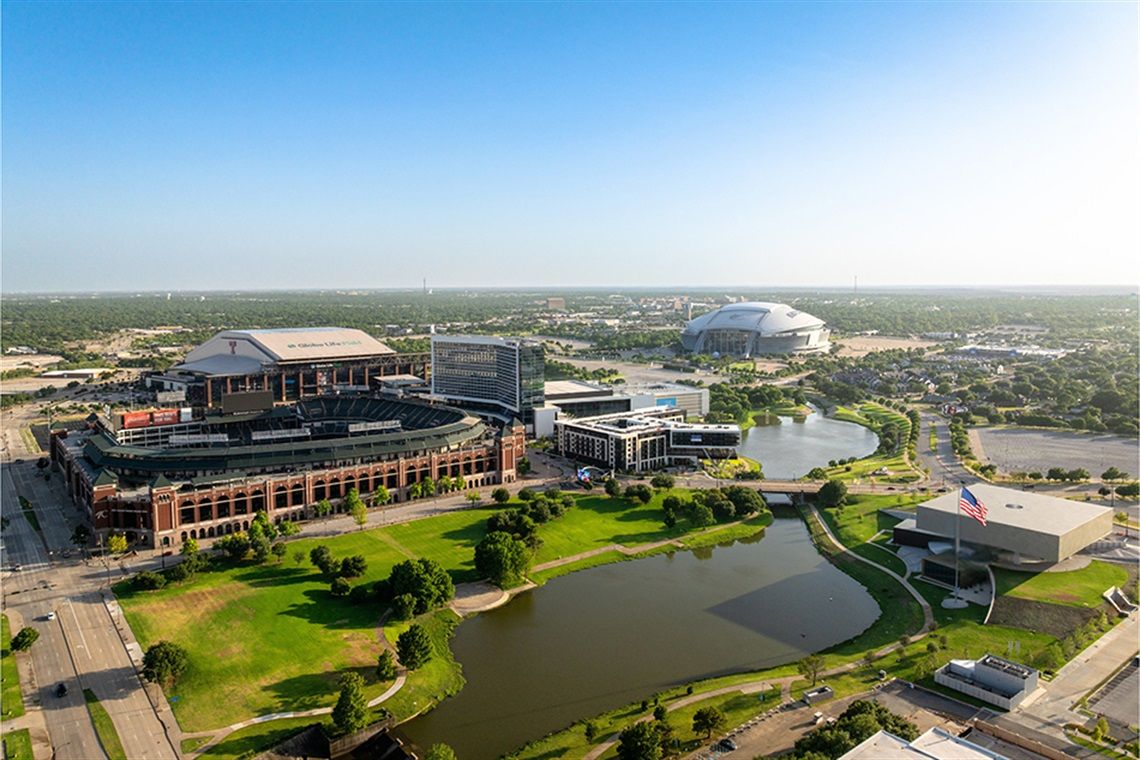
But let's be honest: Arlington's entertainment district is a genuine differentiator. AT&T Stadium (home of the Dallas Cowboys), Globe Life Field (the Rangers' air-conditioned ballpark), Six Flags Over Texas, and the Texas Live! entertainment complex create a lifestyle draw that few Texas cities can match. For buyers who value being in the middle of the action, this matters.
The flip side? Property taxes at 1.77% are slightly higher than Dallas (1.68%), though comparable to Fort Worth. Factor this into your monthly payment calculations.
How Much Does a 1% Rate Change Really Cost You?
Beyond the sticker price of a home, the other crucial number for your budget is the mortgage interest rate—the fee you pay for borrowing money. This rate is the biggest factor in determining your monthly principal and interest payment. While a high home price is a one-time hurdle, the interest rate shapes your financial reality for decades.
The impact of a small change in mortgage rates is significant. On a $300,000 loan (close to Arlington's median), an interest rate jump from 6% to 7% adds approximately $200 to your core monthly payment. That's nearly $2,400 extra per year for the exact same house—money that can no longer go toward savings or other expenses.
The good news: mortgage rates are expected to hover around 6% to 6.3% through 2026, down from the 7%+ peaks of 2023-2024. Combined with Arlington's relatively stable pricing, this creates a window where affordability is actually improving rather than eroding—a rare situation in today's DFW market.
Your Game Plan: How to Navigate the Arlington Market as a Buyer
Arlington's balanced market creates genuine opportunity for prepared buyers. For anyone trying to figure out how to navigate the current Arlington property market, success comes down to preparation—but you also have something Dallas buyers don't: breathing room.
Your game plan comes down to three key steps:
- Get fully pre-approved for a loan, not just pre-qualified, to show sellers you're a serious contender. In a market where buyers have options, sellers prioritize certainty.
- Take your time—with 50+ days on market, you can do proper inspections and make thoughtful decisions. Visit the neighborhood at different times of day. Check the commute during rush hour.
- Negotiate strategically. With 50% of listings seeing price reductions and homes selling at 96% of list price, there's room to work. Asking for closing cost assistance or repairs is reasonable in this environment.
Consider the variety within Arlington itself. Prices vary dramatically by neighborhood: Viridian averages around $574,000, North Arlington around $440,000, and East Arlington closer to $260,000. Understanding these micro-markets helps you find value where it exists.
What Arlington Sellers Need to Know in January 2026
The market hasn't abandoned sellers, but the days of listing high and expecting a bidding war are definitively over. In Arlington, strategic pricing from day one is non-negotiable—homes that sit lose momentum and often require larger price cuts than if they'd been priced correctly initially.
Today's Arlington buyers have options. They're carefully comparing properties, running the numbers, and negotiating. Expect competition on concessions—offering to pay for repairs, cover buyer closing costs, or provide rate buydowns can make your listing more attractive than simply hoping for multiple offers.
Move-in ready condition matters more than ever. Homes that show well and photograph well attract more showings. In a market where 50% of listings have price drops, professional presentation distinguishes the homes that sell at asking from those that don't.
If you receive an offer, remember that the highest price isn't always the strongest. An offer with solid financing, reasonable contingencies, and a motivated buyer is often worth more than a higher number from someone who may not close.
Your Next Move: What to Watch in the Arlington Market
Arlington sits in an interesting position within the DFW metroplex. It's benefiting from the same population growth driving the entire region—the Dallas-Fort Worth-Arlington metro added approximately 178,000 residents last year—while maintaining relative affordability that attracts buyers priced out of trendier markets.
The key signal to watch is inventory movement. If more sellers list and inventory rises further, buyer leverage increases. If the anticipated decline in mortgage rates materializes and brings buyers back, competition could tighten. Arlington's entertainment-driven economy also means watching developments around the stadium district and UT Arlington expansion.
The city's fundamentals remain strong: diverse employment, major entertainment draws, excellent highway access, and a price point that works for middle-class families. This isn't a market in decline—it's a market that never overheated as dramatically as some neighbors and is now offering sensible value.
By tracking these Arlington housing market trends for 2026, you've traded anxiety for awareness. The market is no longer an intimidating force, but a story you now know how to follow.
Categories
Recent Posts