M Streets Dallas Housing Market: May 2026 Market Stats and Trends
M Streets Dallas Housing Market: May 2026 Market Stats and Trends
As May 2026 arrives and the spring buying season peaks, the M Streets stands apart from broader DFW market trends with a story of resilience, architectural preservation, and sustained demand that defies regional correction patterns. This iconic East Dallas neighborhood—spanning primarily zip codes 75206 and 75214 along Greenville Avenue north of Lower Greenville—continues to demonstrate why location, character, and walkability command premiums even when outer suburbs experience double-digit declines.
Here are the numbers that matter for buyers and sellers navigating one of Dallas' most competitive urban neighborhoods.
May 2026 M Streets Market Snapshot
Median Home Price: $865,000 (Redfin, most recent data) Year-Over-Year Price Change: Up 1.8% Days on Market: 21.5 days Market Competition Level: "Very Competitive" (Redfin Compete Score) Price Per Square Foot: $447 (down 6.9% year-over-year) Market Characteristics: Many homes receive multiple offers, some with waived contingencies Median Home Value (Wikipedia): $800,000 Estimated Housing Stock: 3,500-4,500 single-family homes Population: Approximately 6,000 residents
The data reveals a market operating in a different universe than DFW suburban corrections. While Aubrey, McKinney, and Midlothian experience 5-15% price declines, the M Streets posts modest price appreciation alongside days-on-market that would make any seller in outer suburbs envious.
What Makes M Streets Unique in May 2026
Price Appreciation in a Down Market: The M Streets median of $865K, up 1.8% year-over-year, runs directly counter to broader Dallas trends. While citywide Dallas medians show mixed signals (Redfin $495K up 13.8%, Zillow $315K down 4.6%), close-in neighborhoods like M Streets are holding—and in some cases gaining—value.
This isn't market manipulation. This is fundamental supply-demand economics: approximately 3,500-4,500 homes in a conservation district where new construction is tightly controlled, serving a buyer pool that prioritizes walkability, character, and proximity to employment over square footage.
21.5 Days on Market Is Remarkable: In a spring 2026 DFW market where outer suburbs see 60-100+ days on market, M Streets homes moving in 21.5 days represents seller-market dynamics rare in current conditions. This speed indicates genuine competition—buyers making quick decisions to avoid losing properties.
Price Per Square Foot Declining Despite Median Appreciation: The $447/sq ft figure (down 6.9% year-over-year) alongside rising median prices suggests a shift in the mix of homes selling. Larger homes on premium lots are transacting at higher absolute prices, while smaller homes are experiencing some per-square-foot pressure. This reflects M Streets' diverse housing stock—from 1,400 sq ft Tudor cottages to 3,500+ sq ft extensively renovated estates.
Multiple Offers Remain Common: Redfin's characterization of "many homes getting multiple offers, some with waived contingencies" describes market conditions that disappeared from most DFW suburbs 12-18 months ago. This isn't 2021-level frenzy, but it's genuine competition creating urgency.
Conservation District Protection: The M Streets Conservation District ensures architectural integrity and prevents tear-down speculation that might otherwise transform the neighborhood. This regulatory framework preserves character while constraining supply—a combination that supports long-term values.
Understanding M Streets Geography and Character
The "M Streets" name originated from streets beginning with "M" in the Greenland Hills subdivision—McCommas, Mercedes, Morningside, Monticello, Merrimac—developed primarily in the 1920s-1940s. Over time, "M Streets" has expanded to describe the broader East Dallas area including:
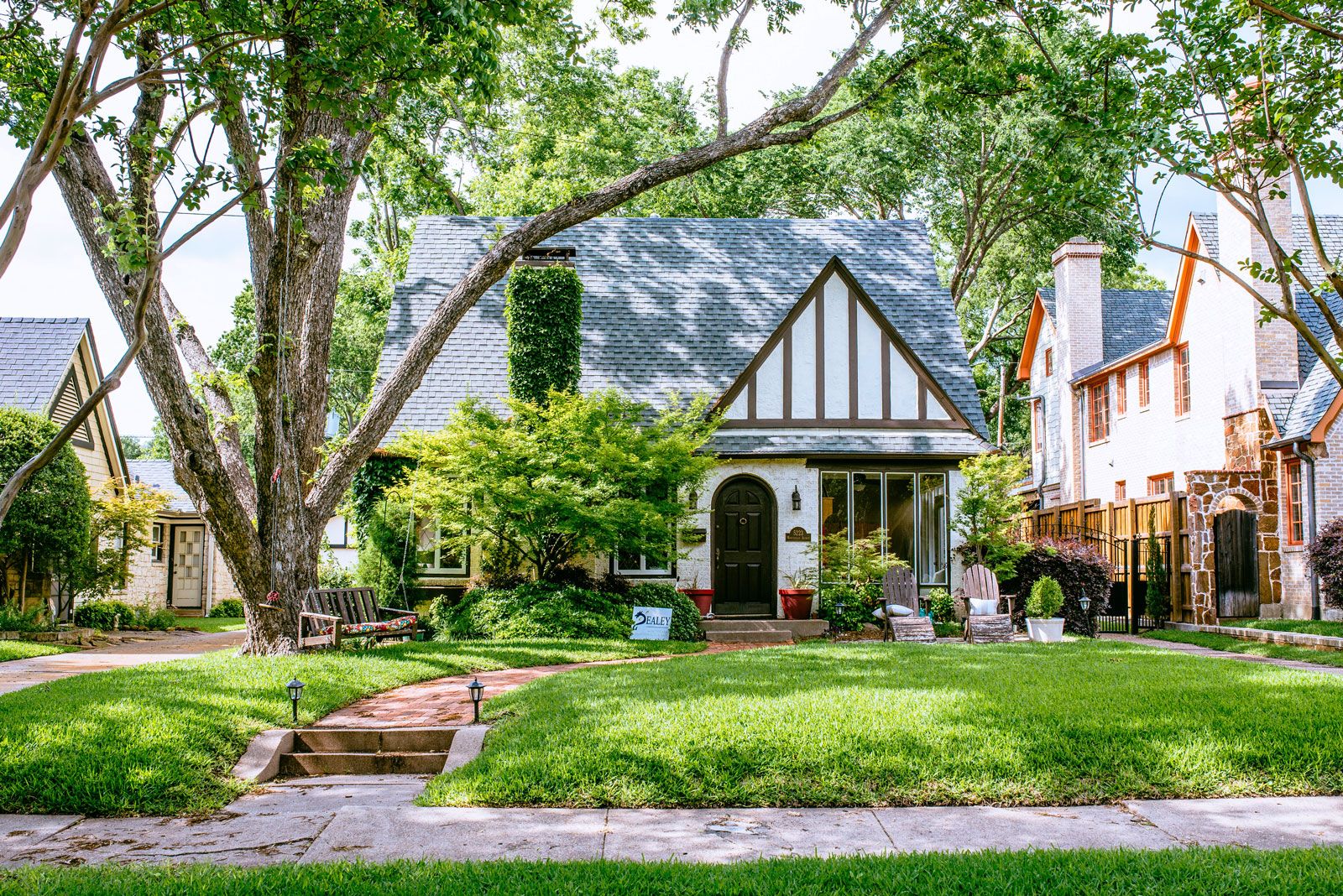
Greenland Hills: The namesake neighborhood and conservation district heart, known for iconic Tudor architecture, steep rooflines, brick exteriors, arched doorways, and distinctive period details. Original homes from the 1920s with preserved stained glass windows, hardwood floors, and architectural integrity.
Vickery Place: Historic charm meeting walkability near Knox-Henderson, with a growing mix of upscale renovations and new builds respecting neighborhood scale.
Belmont Addition: Wider lots, some newer construction, slightly more suburban feel while maintaining walkable access to Greenville Avenue dining and retail.
The collective area spans approximately 3,500-4,500 single-family homes across 75206 and 75214 zip codes, creating one of East Dallas' largest and most active housing markets within a defined neighborhood identity.
Architectural Character: Tudor style dominates—steep gabled roofs, brick and stone exteriors, multi-pane windows, arched doorways, decorative half-timbering. Lots are modest by suburban standards (often 50-70 feet wide), but mature trees, elevated streets with slopes, and consistent setbacks create cohesive, walkable streetscapes.
Home Sizes: Typically range from approximately 1,400 square feet (original smaller Tudors) to over 3,500 square feet (extensively renovated or expanded properties). The median around 2,000-2,500 square feet.
The Walkability and Location Premium
M Streets' enduring value reflects its rare combination of urban walkability and residential character:
Lower Greenville Avenue: Running north-south through the neighborhood's eastern edge, Lower Greenville hosts one of Dallas' premier dining, entertainment, and nightlife corridors. Restaurants including Sister, Terilli's, Mot Hai Ba, Blue Goose, and La La Land Kind Café; bars like Truck Yard, Dubliner, and The Old Monk; shopping at Central Market, Trader Joe's, Caitlin Wilson, and local boutiques—all within walking distance.
Employment Access: Downtown Dallas is 5-7 miles south via North Central Expressway (US-75), typically 12-18 minutes by car or accessible via DART. Uptown/Victory Park employment centers are even closer. This proximity to major job centers is measured in minutes, not the 30-60 minute commutes common from outer suburbs.
White Rock Lake: Major recreational amenity just east of the neighborhood, offering 9+ miles of trails, paddleboarding, cycling, running, and natural escape within urban environment.
SMU Proximity: Southern Methodist University's campus is immediately west, creating access to cultural events, lectures, athletics, and maintaining neighborhood vitality through year-round activity.
Mockingbird Station: DART Light Rail station at Mockingbird Lane provides car-free downtown Dallas access, though most M Streets residents rely on automobiles for daily transport given the neighborhood's elevated income levels.
This walkability is genuinely rare in car-dependent DFW. Most Dallas suburbs require driving for every errand; M Streets residents can walk to dinner, coffee, groceries, and entertainment while maintaining single-family home ownership with yards.
What Buyers Need to Know in May 2026
Expect Competition and Quick Decisions: 21.5 days on market means well-priced homes don't linger. Tour immediately upon listing, make decisions within days, and prepare competitive offers. Indecision costs opportunities in this market.
Understand Renovation Economics: Many M Streets homes are 80-100 years old. Original character (hardwood floors, arched doorways, stained glass) commands premiums, but mechanicals, plumbing, electrical, and foundation work often accompany older construction. Budget $50K-$150K+ for deferred maintenance or updating on unrenovated properties.
Conservation District Rules Matter: The M Streets Conservation District regulates exterior modifications. Significant changes require approval to maintain architectural consistency. Research requirements before purchasing if you plan exterior renovations.
Price Per Square Foot vs. Suburban Norms: At $447/sq ft (down from $480/sq ft), M Streets costs 2-3x typical DFW suburban pricing ($150-200/sq ft). You're paying for location, walkability, character, and scarcity—not just enclosed space.
School Considerations: M Streets is served by Dallas ISD, specifically:
- Geneva Heights Elementary (formerly Robert E. Lee)
- Mockingbird Elementary (formerly Stonewall Jackson)
- J.L. Long Middle School
- Woodrow Wilson High School (offers International Baccalaureate program)
Dallas ISD doesn't match suburban district rankings (GISD #619 of 1,196 statewide). Woodrow Wilson's IB program attracts motivated families, but many M Streets residents with school-age children utilize private schools: St. Thomas Aquinas Catholic School and other private options throughout Dallas.
For buyers prioritizing elite public schools, M Streets requires accepting Dallas ISD or budgeting private school tuition ($10K-$25K+ annually per child).
HOA and Neighborhood Associations: While not universal HOAs like suburban master-planned communities, various neighborhood associations maintain community identity and organize events. Participation is voluntary but contributes to neighborhood cohesion.
Parking and Garage Limitations: Many original 1920s-1940s homes have single-car garages or converted garages. Street parking is common. Modern families with 2-3 vehicles may find parking challenging compared to suburban 3-car garage norms.
Property Tax Reality: Dallas County property taxes run approximately 2.0-2.2% of assessed value. On an $865K home, expect $17,300-$19,030 annually in property taxes. This is higher absolute dollars than suburban alternatives, though rates are comparable.
What Sellers Need to Know in May 2026
You're Operating in a Seller's Market: 21.5 days on market, multiple offers common, 1.8% year-over-year appreciation—these are seller-favorable conditions rare in current DFW. But this doesn't mean careless pricing or poor presentation succeed.
Preservation Matters More Than Maximum Square Footage: Well-preserved original character—intact hardwood floors, original built-ins, stained glass, period hardware—commands premiums over maximally-expanded square footage that compromises architectural integrity. Buyers seeking M Streets want Tudor character, not generic space.
Staging and Photography Critical: At $865K median and $447/sq ft pricing, professional presentation is mandatory. Buyers at this price point expect magazine-quality marketing. Amateur iPhone photos won't compete.
May-June Represents Peak Activity: Spring brings maximum buyer activity before summer travel season. List early May to capture peak attention before late June softness.
Strategic Pricing Still Matters: Despite competitive market, overpricing by $100K+ because "it's M Streets" will extend days on market. Price based on recent neighborhood comps (same subdivision, similar condition, comparable size) rather than aspirational valuations.
Highlight Walkability and Location: Emphasize proximity to Lower Greenville dining, White Rock Lake recreation, downtown Dallas employment, SMU cultural access. These location advantages are what buyers pay premiums for—make them central to marketing narrative.
Target Right Buyer Profile: M Streets attracts young professionals (25-40), empty nesters downsizing from larger suburban homes, and urban-oriented families willing to accept Dallas ISD or budget private schools. Marketing should speak to these demographics rather than suburban family priorities.
The Broader Dallas Context: Why M Streets Defies Trends
Understanding M Streets' resilience requires understanding what it offers that outer suburbs can't replicate:
Fixed Supply in High-Demand Location: The 3,500-4,500 home count can't expand meaningfully. Conservation district prevents tear-downs and rebuilds. Supply is essentially fixed while Dallas population and employment continue growing, creating sustained demand pressure.
Walkable Urban Lifestyle Scarcity: In a metroplex of 7+ million built almost entirely for automobiles, genuinely walkable neighborhoods with single-family homes are extraordinarily rare. M Streets, Lakewood, parts of Oak Lawn, and Highland Park represent the few options. Scarcity commands premiums.
Employment Proximity Value: A 15-minute downtown Dallas commute vs. 45-60 minutes from outer suburbs translates to 500-1,000 hours annually saved. For high-earning professionals valuing time, this proximity justifies significant price premiums.
Architectural Irreplaceability: You can't build new 1920s Tudors. The architectural character is finite and protected. Buyers seeking this aesthetic have limited options, supporting pricing.
Demographic Fit: The M Streets attracts buyers willing to trade suburban space, elite public schools, and 3-car garages for walkability, character, and urban access. This self-selecting buyer pool maintains demand even when broader suburban markets soften.
Mortgage Rate Impact at M Streets Price Points
At median M Streets pricing, mortgage costs create interesting dynamics. On an $865,000 purchase with 20% down ($173K down payment, $692K loan) at 6.5% interest:
- Monthly P&I: $4,374
- Property tax (~2.1%): $1,512/month
- Insurance: $250/month (estimated)
- Total: ~$6,136/month
This requires household income of approximately $210K+ under standard 28% debt-to-income ratios. The M Streets buyer profile skews toward high-earning professionals, dual-income households, and buyers with substantial down payments.
The rate environment (6-6.5%) vs. pandemic-era 3-4% rates means buyers need significantly higher incomes to qualify for M Streets pricing than existed 2020-2021. But the buyer pool targeting M Streets tends toward higher income levels less constrained by rate sensitivity.
What to Watch Through Summer 2026
Several indicators signal whether M Streets momentum sustains:
Days on Market Trend: Currently 21.5 days. If DOM extends toward 30-40 days, it signals slight cooling. If DOM drops below 20 days, competition is intensifying. Summer traditionally sees some slowdown, but M Streets historically maintains activity better than suburbs.
Price Per Square Foot Stabilization: Currently $447 (down 6.9%). Watch whether this metric stabilizes, continues declining, or reverses. Declining price/sq ft alongside rising median prices suggests larger homes transacting—sustainable only if smaller home market remains healthy.
Inventory Levels: M Streets inventory is always limited. Summer may bring modest listing increases as sellers target fall buyers. If inventory builds beyond normal seasonal patterns, buyer leverage increases.
Broader Dallas Employment Trends: Major corporate layoffs or hiring freezes in downtown Dallas would impact M Streets more directly than outer suburbs given the employment-proximity value proposition.
Lower Greenville Retail/Dining Vibrancy: The walkability premium depends on thriving Lower Greenville businesses. Restaurant/retail closures would diminish neighborhood appeal; new openings reinforce it.
Renovation Loan Availability: Many M Streets transactions involve renovation financing. If lenders tighten renovation loan standards, it could constrain buyer pool for properties needing work.
The Bottom Line: May 2026 M Streets Market
The M Streets housing market heading into peak spring 2026 presents conditions dramatically different from DFW suburban norms:
For Buyers:
- Expect competition, quick decisions, and multiple-offer scenarios
- Budget $865K median, $447/sq ft, plus renovation costs for older stock
- Embrace Dallas ISD or budget private school tuition
- Prioritize walkability, character, employment proximity over square footage
- Accept premium pricing for irreplaceable location and architecture
For Sellers:
- Operate in seller-favorable market (21.5 days, rising prices, competition)
- Professional presentation and strategic pricing still mandatory
- Preservation of character commands premiums over maximum expansion
- May-June represents optimal selling window
- Target urban-oriented, high-income buyer demographic
Market Outlook: M Streets represents Dallas' ultimate urban neighborhood scarcity play. Fixed supply, conservation protection, employment proximity, walkable lifestyle, and architectural irreplaceability create sustained demand resilience that outer suburban growth corridors can't replicate.
The question for summer: Will M Streets' current premium over broader Dallas market (median $865K vs. citywide $315K-$495K depending on source) expand further as buyers increasingly value urban proximity, or will high absolute prices and rate environment eventually constrain buyer pool?
For participants in M Streets' market, May 2026 offers clarity: this is a competitive, high-value neighborhood operating largely independent of broader DFW correction trends. Buyers need decisive action and realistic budgets; sellers need quality presentation and strategic pricing. But both operate in conditions far more favorable than most DFW submarkets.
The M Streets isn't for everyone—it requires accepting Dallas ISD, premium pricing, older construction, and urban trade-offs. But for buyers valuing walkability, character, and employment proximity above suburban space and elite public schools, May 2026 represents a market where those priorities command measurable, sustained premiums.
Categories
Recent Posts